
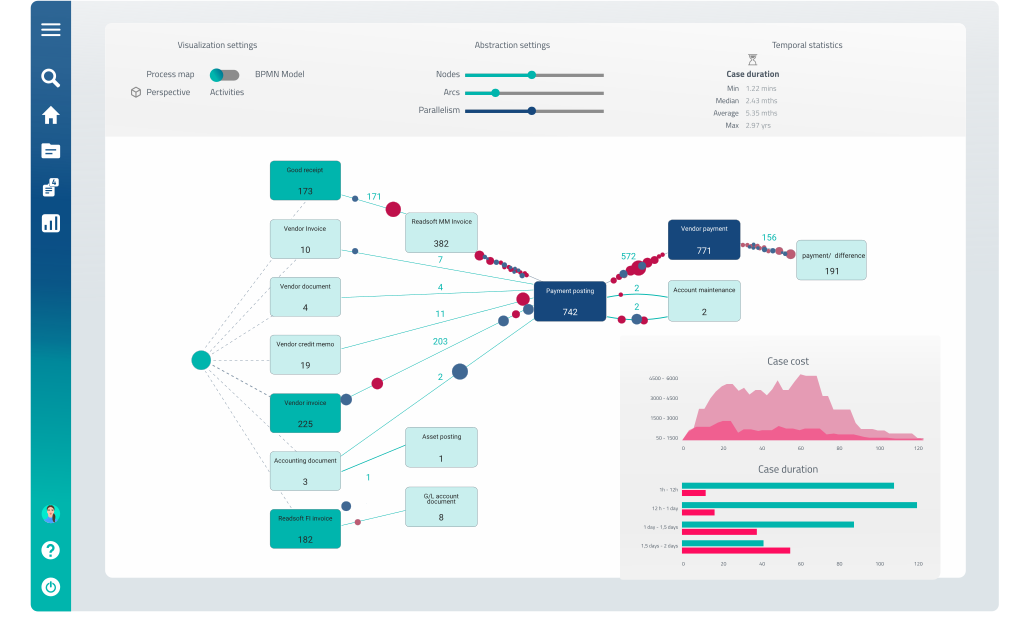




Your AI strategy is only as ready as the processes behind it
 20 October 2026
Operations and transformation leaders are under growing pressure to show how AI can improve performance, reduce manual work, and support better decisions. The natural response is often to begin with technology, such as an automation platform, an AI copilot, or an intelligent document solution.
These investments can create value, but they do not remove uncertainty about how work is actually performed. Many AI-enabled transformation initiatives run into difficulties before a model is deployed because the underlying processes are not sufficiently visible, consistent, or governed. What appears to be an AI problem is often a process readiness problem.
What is process readiness?
Process readiness describes how well an organisation understands, standardises, governs, and maintains the processes on which transformation depends. A process-ready organisation has sufficient visibility into how work is performed, where processes vary, who owns them, and which controls and systems shape their execution.
This does not mean that every process must be performed in exactly the same way across the organisation or documented in exhaustive detail before AI can be used. It means that the organisation can identify the processes relevant to a use case, distinguish necessary variants from unmanaged inconsistency, and provide the context needed for responsible design and implementation.
Process readiness is therefore a practical element of AI readiness. Model capability matters, but so does the operational environment in which the model will be used.
Why AI exposes gaps in process visibility
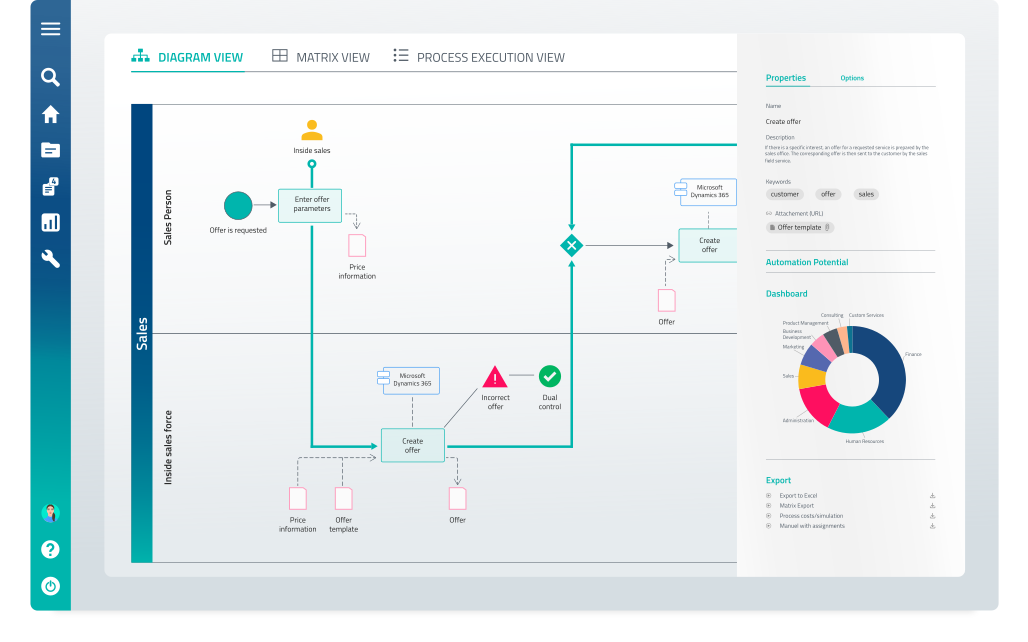
Processes are less tangible than revenue, headcount, or system inventories. The actual flow of work across departments and locations may be spread across process models, local files, system configurations, and the knowledge of employees who understand how exceptions are handled.
The result is a process visibility gap. Teams may know the intended process without knowing how it works in practice. They may understand their own activities but lack visibility into upstream dependencies, downstream effects, or controls that apply across functional boundaries.
AI does not resolve this uncertainty by itself. If a use case is designed around an incomplete process description, its outputs may reflect inconsistent inputs, overlook exceptions, or conflict with existing controls. Automation can then accelerate an existing problem rather than address it.
Before AI can support a process reliably, teams need a sufficiently clear view of the work involved, including decisions, data, roles, systems, controls, and exceptions.
Why inconsistent processes limit scale
A local pilot may succeed because the team understands its own environment and compensates for gaps through experience. Scaling the same use case across departments, locations, or business units is harder when the underlying processes vary in ways that have not been identified or governed.
Teams may use different inputs, approval thresholds, systems, terminology, or exception paths. If these differences remain invisible, a solution designed for one context may perform inconsistently elsewhere. The constraint is not necessarily the model. The organisation may lack a reliable basis for deciding what can be standardised and what needs to remain different.
Process standardisation can support scale, but it should not mean forced uniformity. The aim is to establish a common process where appropriate, document necessary variants, and make differences explicit enough to govern. This gives AI and automation teams a more stable foundation without ignoring legitimate operational requirements.
Process readiness requires more than documentation
A process repository can improve transparency, but documentation alone does not create business process maturity. Process readiness also depends on whether process knowledge is current, accessible, clearly owned, and connected to operational reality.
Four dimensions provide a practical way to assess this foundation:
Visibility. Can the organisation see how critical work is designed and performed, including the relevant systems, roles, controls, handovers, and exceptions?
Consistency. Are important processes sufficiently standardised across teams and locations, and are necessary variants documented and understood?
Governance. Are ownership, review, approval, control, and change responsibilities clear enough to support process governance and accountable AI adoption?
Currency. Is process knowledge reviewed when operations change, and can the organisation verify that documented processes still reflect day-to-day execution?
A weakness in any of these dimensions can undermine transformation. Limited visibility makes a use case difficult to define. Unmanaged variation obstructs scale. Unclear governance creates uncertainty about decisions and controls. Outdated knowledge leads teams to design for an organisation that no longer exists.
How to assess your organisation’s process readiness
Begin with one business-critical process linked to a proposed AI or automation use case. Instead of asking only whether documentation exists, test whether it provides a reliable basis for action.
Consider five questions:
Can teams explain how the process works across departments and locations? Look for differences between the designed process and day-to-day execution.
Are process variants documented and deliberately governed? Identify which differences are required and which indicate unmanaged inconsistency.
Can the transformation team identify the systems, roles, controls, data, and exceptions involved? These relationships influence whether the proposed use case can operate reliably.
Is ownership clear? A named owner should be responsible for reviewing and updating process knowledge as the business changes.
Can the organisation validate its process knowledge against operational evidence? Use employee input, system evidence, or process data to test whether the documented view remains accurate.
The goal is not to create a perfect model before work begins. It is to surface assumptions early, before a pilot fails to scale, control requirements emerge late, or teams discover that they have been working from different versions of the process.
Where to start
Start by making one critical process visible from end to end. Bring together the people who own, perform, govern, and support it. Compare the documented process with operational evidence, and identify where teams, locations, systems, or control requirements differ.
Then decide which elements should be standardised and which variants need to remain. Assign ownership for the process knowledge, define how changes will be reviewed, and make the resulting view accessible to the people who use it. This provides a stronger basis for process governance, compliance activities, automation, and AI-supported use cases.
Process readiness is not an additional delay before AI adoption. It helps teams understand where AI may create value, which conditions need attention first, and what must be in place before a successful use case can be extended beyond its initial team.
How ready is your process foundation for AI?
Take the 5-minute Digital Maturity Assessment to evaluate your organisation across transparency and visibility, standardisation and consistency, centralisation and a single source of truth, governance and compliance, and automation and AI readiness.
Receive a personalised maturity level, a breakdown by dimension, and recommended next steps based on the areas that need the most attention.
Frequently asked questions
What is process readiness?
Process readiness describes whether an organisation understands, standardises, governs, and maintains the processes on which transformation depends. It includes visibility into how work is performed, clarity about ownership and controls, and confidence that process knowledge reflects operational reality.
Why do AI transformation projects struggle?
AI transformation projects can struggle when they are designed around incomplete process knowledge, unmanaged variation, unclear ownership, or controls identified too late. The technology may work as intended while the operational environment prevents the use case from scaling or producing consistent results.
Can AI improve poorly documented business processes?
AI can support analysis and process improvement, but it cannot independently supply missing context, resolve undocumented exceptions, or reconcile conflicting accounts of how work is performed. Human input and reliable operational evidence remain necessary to establish an accurate foundation.
Why is process visibility important for AI adoption?
Process visibility gives teams the context needed to identify suitable use cases, understand dependencies, account for exceptions and controls, and assess whether a solution can scale. Without that context, AI may be applied to an incomplete or outdated representation of the process.
How can organisations assess their process readiness?
Select one critical process and assess its visibility, consistency, governance, and currency. Check whether teams can explain how it operates across organisational boundaries, whether variants are managed, whether ownership is clear, and whether operational evidence supports the documented view.
GBTEC Software AG
Gesundheitscampus-Süd 23
44801 Bochum
Germany
