GBTEC Process Design
Understand & Transform
Supercharge your business operations with the most intuitive AI-powered BPM software.
It seems that you come from a German speaking country. Here you can change the language
English
Products by GBTEC
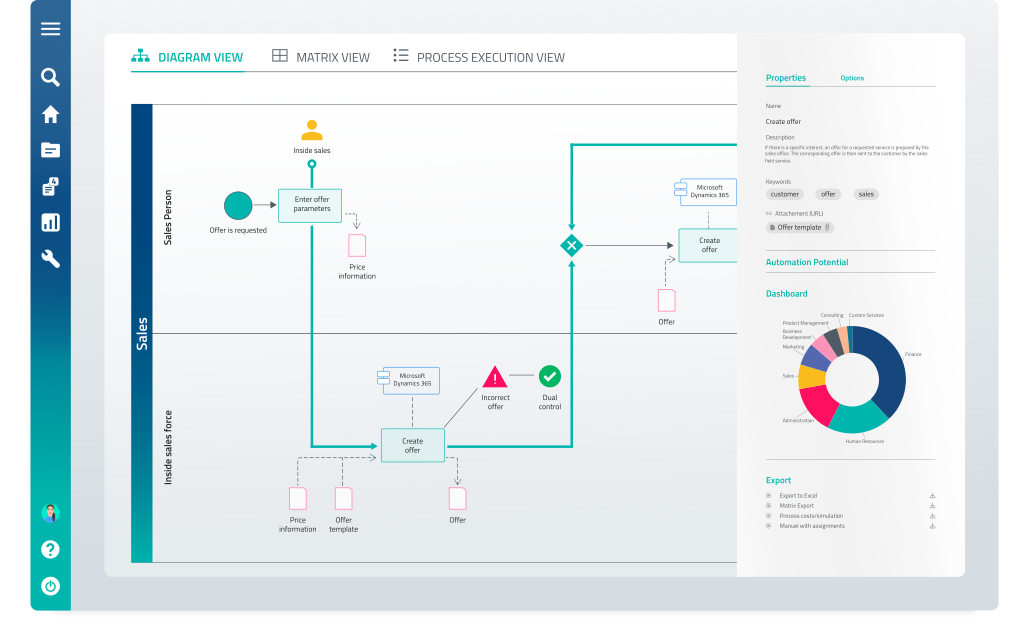
Process Design
Understand & Transform
GBTEC Process Design
Understand & Transform
Supercharge your business operations with the most intuitive AI-powered BPM software.
Enterprise Architecture
Structure & Streamline
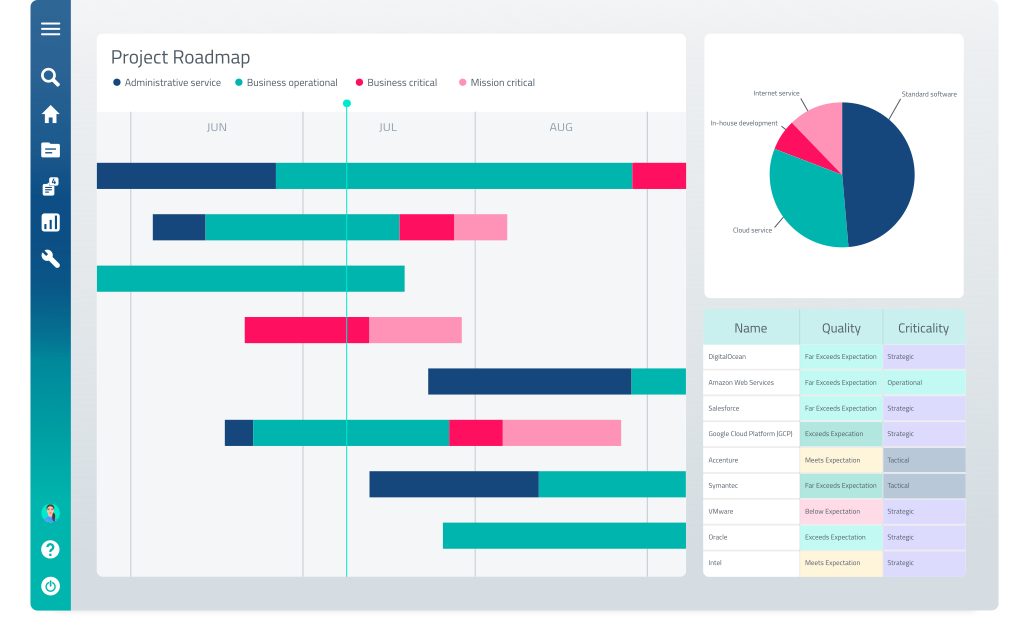
GBTEC Enterprise Architecture
Structure & Streamline
Reduce IT costs and accelerate your IT transformation with our intelligent EAM solution.
Work Orchestrator
Automate & Orchestrate
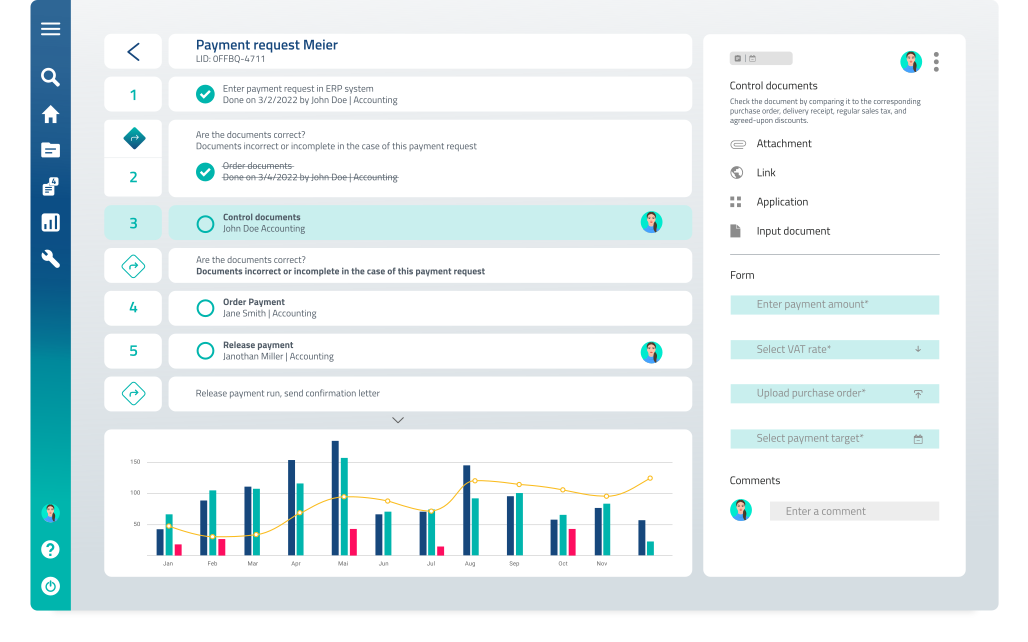
GBTEC Work Orchestrator
Automate & Orchestrate
Redefine the way you work with record-breaking workflow automation.
GRC Management
Secure & Comply
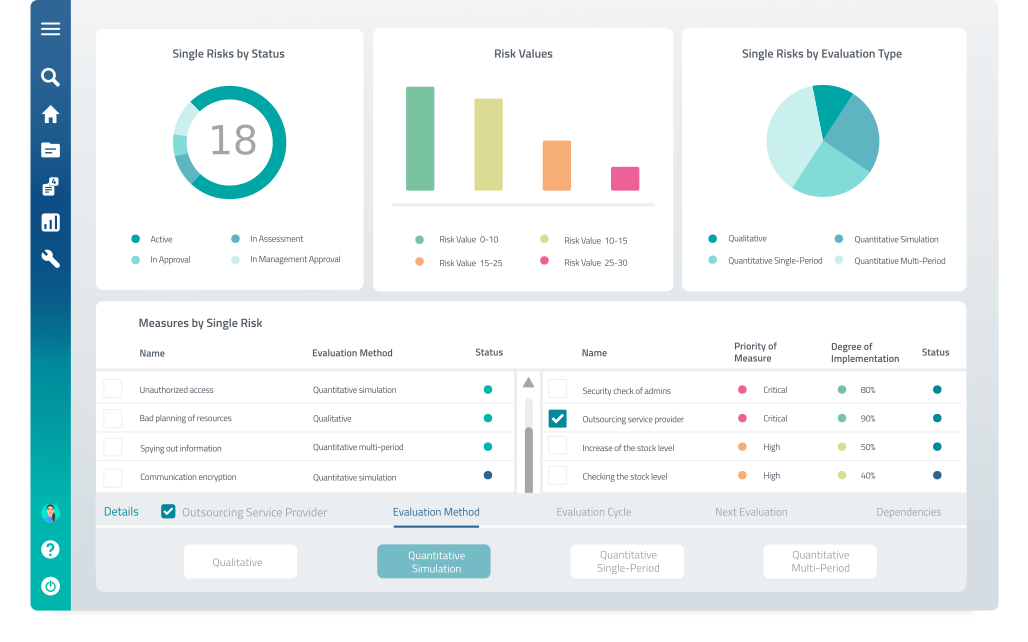
GBTEC GRC Management
Secure & Comply
Explore our comprehensive GRC platform tailored to meet your needs.
Process Intelligence
Reveal & Accelerate
GBTEC Process Intelligence
Reveal & Accelerate
Unlock crucial insights from hidden process data and swiftly eliminate weak points.
Use Case
Understand & Transform
GBTEC Process Design

Process Excellence
Optimize your workflows for maximum performance and efficiency.

Digital Transformation Projects
Pave the way for your digitization project with a process-driven approach.

Integrated Management System
Align various management systems and leverage synergies.

Quality Management
Set new standards for excellence in quality management.

SAP S/4HANA Transformation
Successfully navigate SAP S/4HANA migration or implementation projects.
Structure and Streamline
GBTEC Enterprise Architecture
Business Enterprise Architecture
Align your business strategy and IT landscape in perfect harmony.

Business Capability Mapping
Gain clear insights to seamlessly align strategy, processes, and IT.
IT Landscape Transformation
Transform your IT landscape to agilely navigate the digital transformation.
IT Rationalization
Optimize your IT landscape for maximum performance and efficiency.

Technology Risk Management
Protect your business from risks and foster stability for innovation.
Automate & Orchestrate
GBTEC Work Orchestrator

HR Workflow Automation
Shape the future of Human Resources with automated processes.

IT Workflow Automation
Relieve your IT department from time-consuming routine tasks with automated workflows.
Approval Workflow Automation
Automate your approval workflows and accelerate decision-making.

Forms Automation
Simplify data collection and processing with automated forms.
Secure & Comply
GBTEC GRC Management

ESG Management
Enhance social responsibility and environmental impact while adhering to governance standards.

Outsourcing Management
Keep the security of your outsourced processes in mind at all times.
Risk Simulation
Proactively simulate risks and be prepared for potential crisis situations.

Compliance Management
Monitor compliance, mitigate risks, and quickly adapt to new requirements.

IT and Cyber Security
Manage IT risks, comply with regulations, and protect your most valuable company assets.

MaRisk
Benefit from comprehensive risk management to fulfill BaFin's requirements fully.

NIS-2
Achieve NIS2 compliance with integrated IT risk management and automated workflows.
Industries

Automotive
Gain new insights for excellent processes and an improved customer experience.

Education & Universities
Spot improvement potentials in your administrative and teaching processes effortlessly.

Energy & Utilities
Uncover bottlenecks and potential savings in your processes systematically.

Finance & Insurance
Create secure and reliable processes in a highly regulated environment.

Healthcare
Improve efficiency through optimized, digital processes in healthcare.

Logistics
Optimize supply chains and uncover potential savings in your supply chain processes.

Manufacturing
Exploit the potential in your procurement, production, and transportation processes.

Pharma & Chemistry
Enhance your processes and ensure compliance with regulatory standards.

Public
Accelerate digitalization and pinpoint areas for process improvement.

Real Estate & Construction
Unlock potential savings in marketing and administration of your construction projects.

Other Industries
Unlock significant cost savings while simultaneously boosting process efficiency.
All Resources
Webinars & Events
Whitepaper
Wiki

Process Management
Accelerate growth. Optimize your business processes for peak performance.

Enterprise Architecture
Align systems, drive efficiency. Transform your enterprise for the future.

Process Automation
Work smarter, not harder. Let automation enhance productivity and drive your success.

Process Mining
Shine a light on your processes. Discover inefficiencies and power your progress.

Governance, Risk & Compliance
Protect what matters. Strengthen your operations with structure and security.
Blog
Success Stories
Product Information
Enterprise Architecture Management (EAM) is no longer a background discipline. EA tools now sit at the centre of every significant question a technology leader faces: where applications create risk, which processes depend on critical platforms, and how quickly the organisation can adopt AI without exposing hidden compliance gaps. In an era of accelerating AI adoption, regulatory pressure, and transformation complexity, stale architecture models quickly becomea business risk.
Backed by benchmarks from Gartner, Forrester, and Bain, this Buyer's Guide gives you a clear, evidence-based framework for evaluating EA tools – and specifically why an EAM platform natively unified with BPM and connected to GRC capabilities represents a fundamentally different class of capability. Use it to build the business case for your next EA initiative across cost, compliance, transformation speed, and AI readiness.
Excerpt
Request now to get access to the full version of the Buyer’s Guide.
GBTEC Software AG
Gesundheitscampus-Süd 23
44801 Bochum
Germany