



Why NIS2 is not an IT project – and what successful organisations do differently
 19 May 2026
 The reflex starting point
As soon as NIS2 appears on the agenda, many organisations initially turn their attention to IT or information security. Checking firewalls, updating policies, commissioning external assessments. This approach is understandable – but it falls short.
Because NIS2 is more than a technological issue. The directive requires an organisation-wide approach with clear leadership responsibility.
Understanding NIS2 as an organisational project
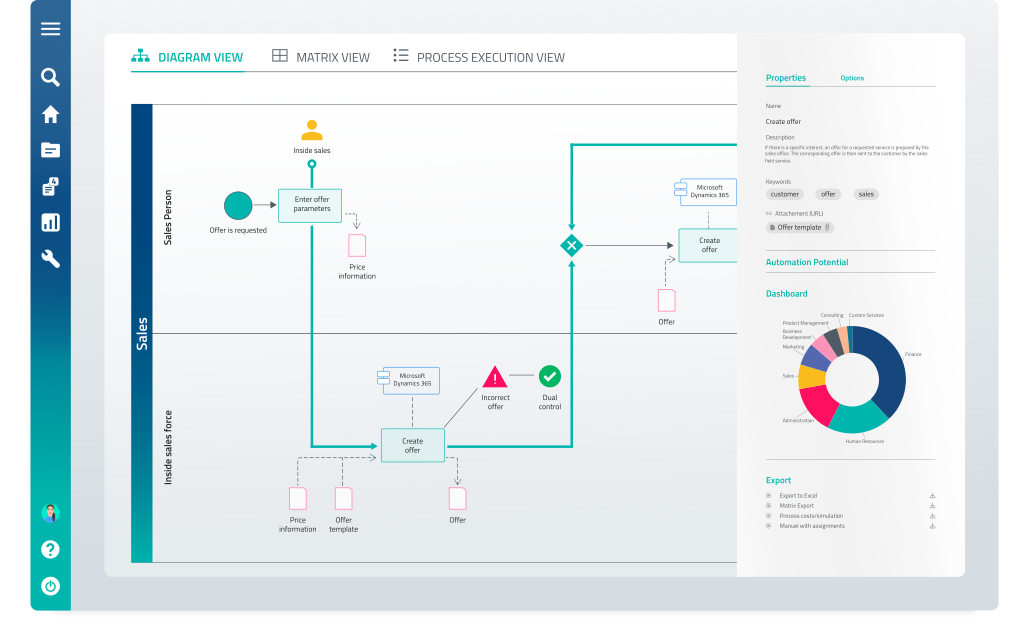
NIS2 is a risk management framework that integrates technical, organisational and process-related measures. It requires effective workflows, clear responsibilities and structured ICT risk management (Information and Communication Technology Risk Management). This enables organisations to identify, assess and manage ICT risks systematically through appropriate measures.
These requirements extend far beyond traditional IT security and turn the directive into an organisational initiative: responsibility does not rest with individual functions but is shared across the business.
When accountability is unclear, uncertainty can arise during implementation. Well-defined roles and structures provide direction and support decision-making.
Risk management as a strategic steering instrument
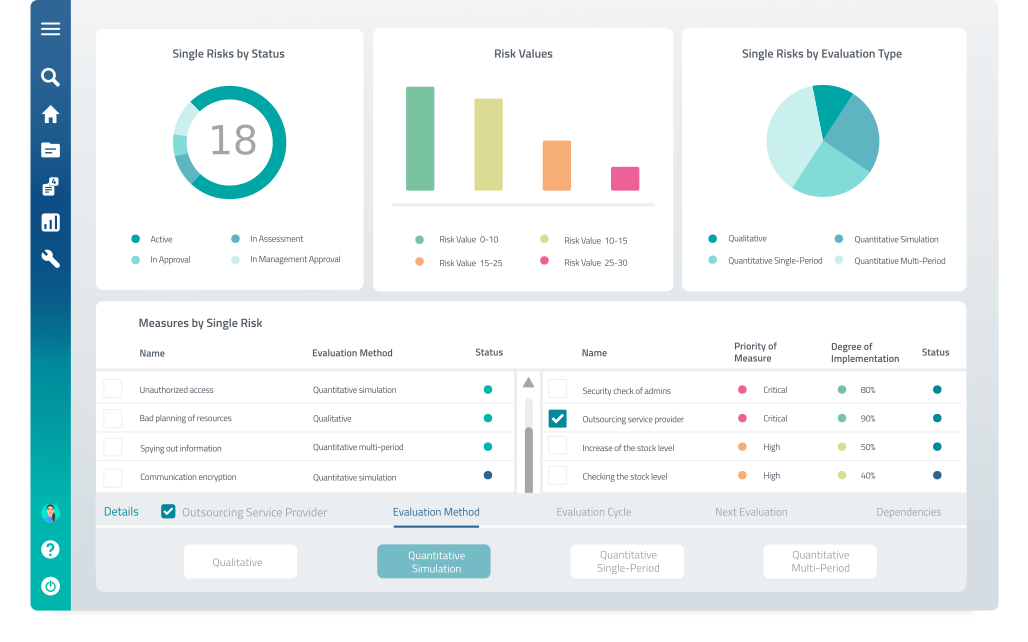
At the core of the directive is a structured ICT risk management system that is based on recognised standards and includes all relevant risks. In addition to cyberattacks, this also includes outages, human errors, supply chain risks and physical threats.
Successful organisations use this requirement to sharpen their understanding of risk:
- Which services are truly critical?
- Where do dependencies exist?
- Which risks are acceptable – and why?
These questions cannot be delegated and must be decided at the leadership level.
A structured risk management system improves an organisation’s ability to steer effectively. Decisions become more transparent, priorities clearer and measures more targeted.
Processes outweigh documentation
Many organisations have extensive policies. What is often missing is the connection to operational reality. NIS2, therefore, focuses not on documents but on functioning processes: risk identification, incident management, escalation and continuous improvement.
A documented process that does not work in practice is worthless. A clearly defined and lived process, on the other hand, creates operational certainty – even under time pressure.
If processes are not practised and aligned, delays occur in a crisis. Well-rehearsed workflows, on the other hand, enable fast and coordinated responses.
Incident reporting as a maturity indicator
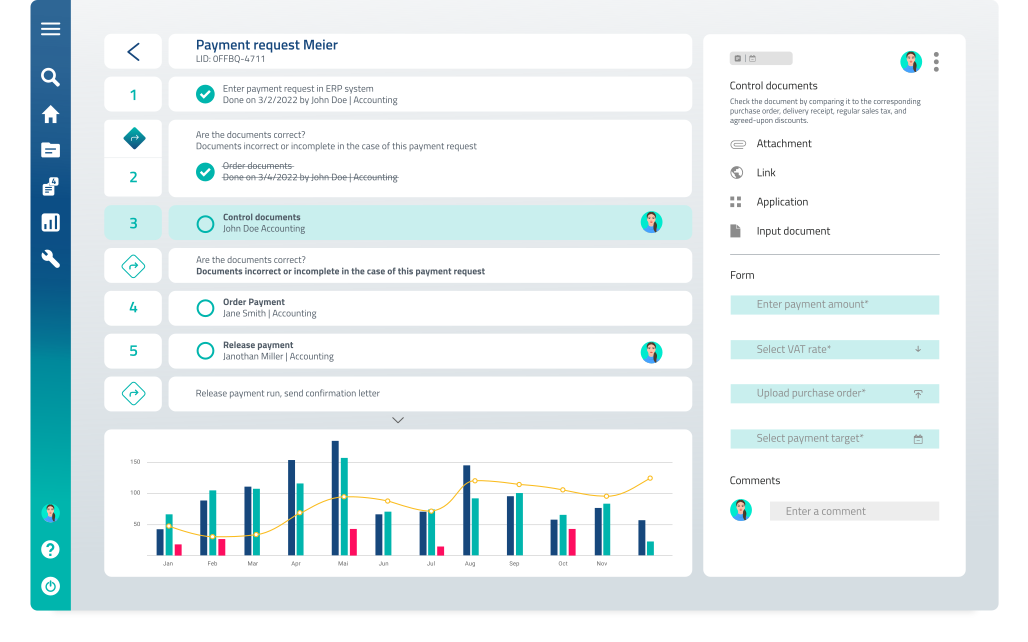
The ability to report incidents in a timely and structured manner becomes a real test of maturity for many organisations. NIS2 requires clarity regarding thresholds, responsibilities and information flows.
Those who only define what to do when an incident actually occurs risk failing not only technically but also organisationally. Mature organisations secure these processes in advance.
Supply chains as part of your own security
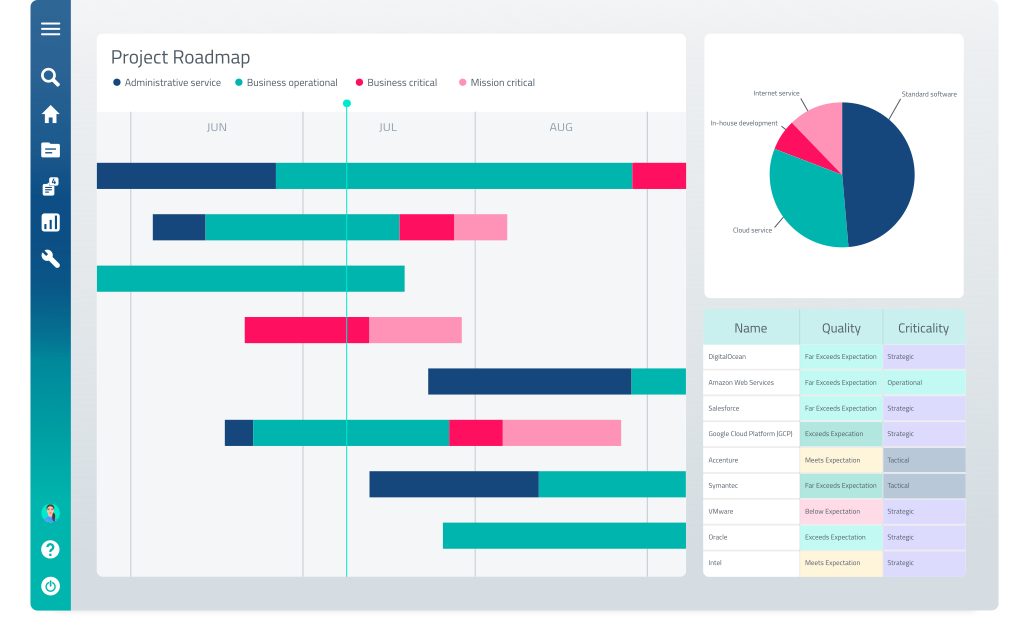
NIS2 explicitly highlights ICT third-party management. Third parties must be integrated into the overarching risk management – from selection and monitoring through to emergency and reintegration plans.
This makes Third Party Risk Management an integral part of organisational security.
If external dependencies are not systematically assessed, risks arise outside the organisation’s direct sphere of influence. Transparency, clear criteria and continuous evaluation reduce these uncertainties and strengthen operational cyber resilience.
Digitalisation as a necessary foundation
At the latest during implementation, it becomes clear that manual approaches reach their limits. Excel-based solutions offer neither transparency nor auditability nor end-to-end traceability.
Digital solutions such as GBTEC GRC Management make it possible to manage risks, incidents, third parties and evidence on one central platform – with clear workflows, deadlines and responsibilities.
Structured systems create the conditions to implement processes consistently and document decisions in a traceable manner.
Conclusion
NIS2 is an organisational project with clear leadership responsibility.
Organisations that follow this approach view the directive as a framework for structured decision-making, clear processes and integrated risk management. This creates a solid foundation for sustainable resilience.
Find out how GBTEC GRC Management can help you with your NIS2 implementation
Frequently asked questions
Why is NIS2 not purely an IT project?
Because the directive addresses organisational structures, risk management and decision-making processes and does not only include technological measures.
How does ICT risk management work under NIS2?
It includes the systematic identification, incident management, escalation, documentation and continuous improvement.
What processes does NIS2 specifically require?
Among others, risk identification, incident management, escalation, documentation and continuous improvement.
How are third parties integrated into NIS2?
Through structured selection, continuous monitoring as well as emergency and recovery plans within the framework of risk management.
Why do companies struggle with NIS2 implementation?
Often because responsibilities are unclear, processes are not defined or risk management is not implemented systematically.
GBTEC Software AG
Gesundheitscampus-Süd 23
44801 Bochum
Germany
