BIC Process Design
Understand & Transform
Supercharge your business operations with the most intuitive AI-powered BPM software.
It seems that you come from a German speaking country. Here you can change the language
English
Products by GBTEC
BIC Process Design
Understand & Transform
BIC Process Design
Understand & Transform
Supercharge your business operations with the most intuitive AI-powered BPM software.
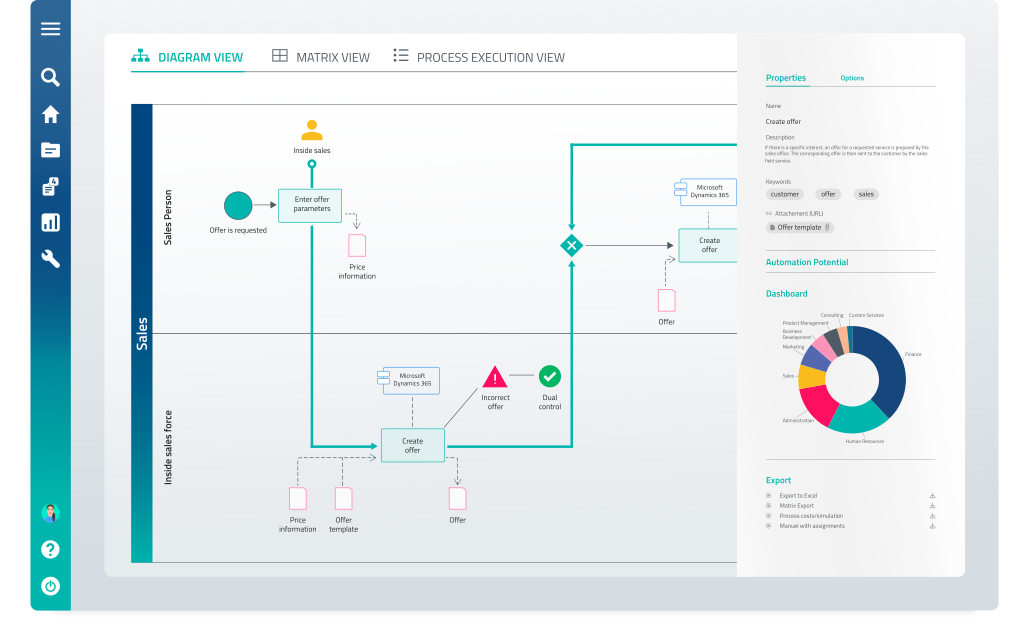
BIC EAM
Structure & Streamline
BIC EAM
Structure & Streamline
Reduce IT costs and accelerate your IT transformation with our intelligent EAM solution.
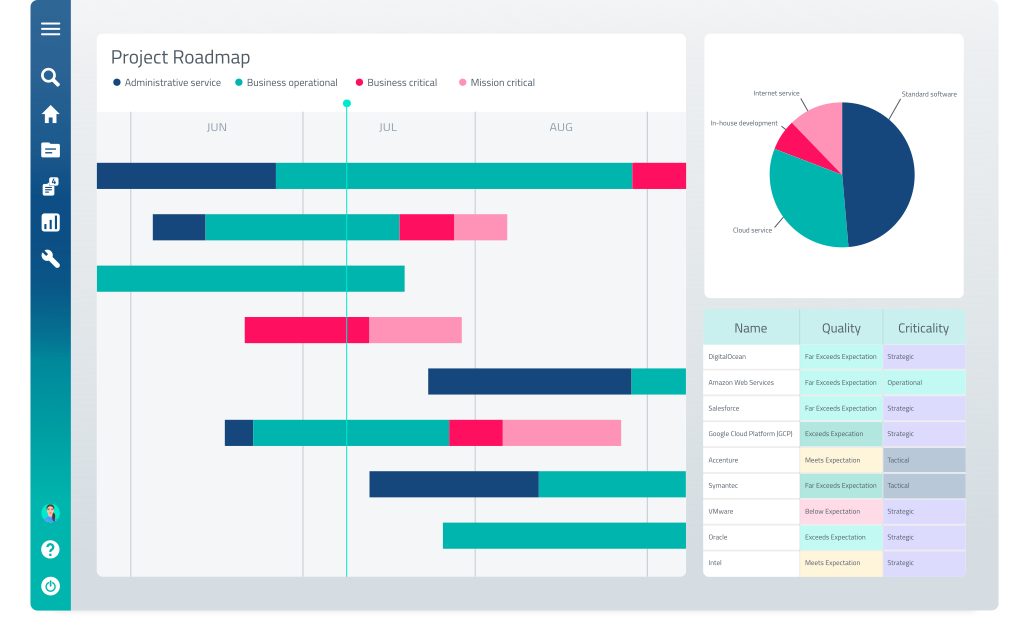
BIC Process Execution
Automate & Orchestrate
BIC Process Execution
Automate & Orchestrate
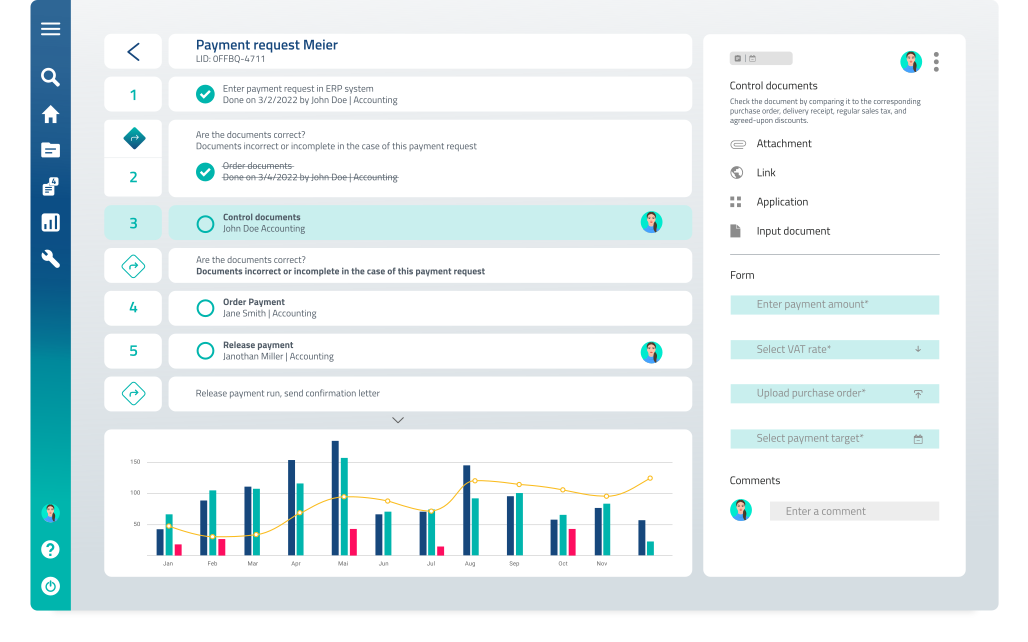
Redefine the way you work with record-breaking workflow automation.
BIC GRC
Secure & Comply
BIC GRC
Secure & Comply
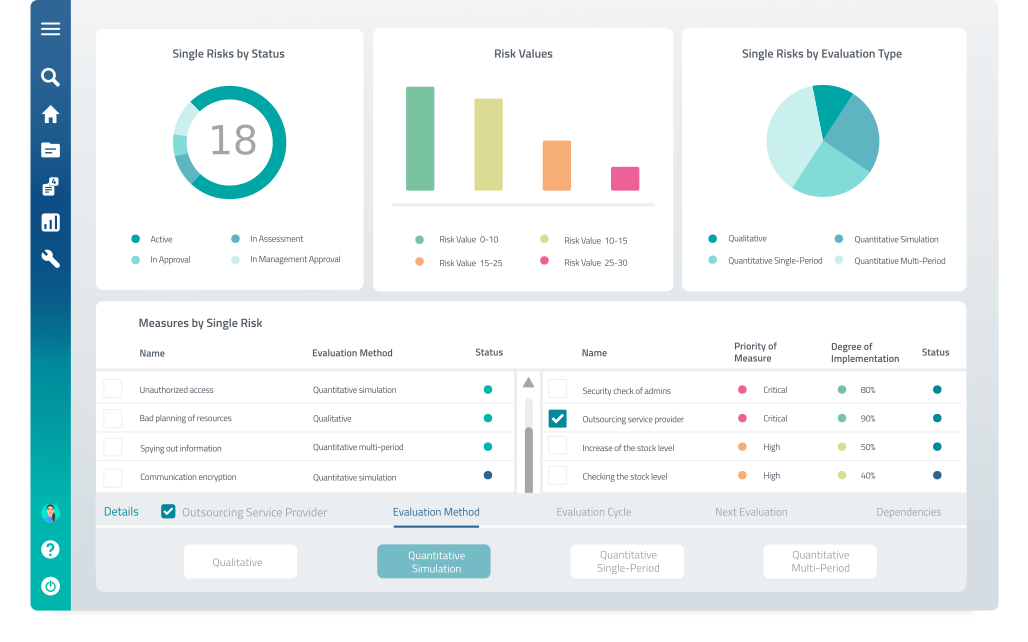
Explore our comprehensive GRC platform tailored to meet your needs.
Apromore Process Mining
Reveal & Accelerate
Apromore Process Mining from Salesforce
Reveal & Accelerate
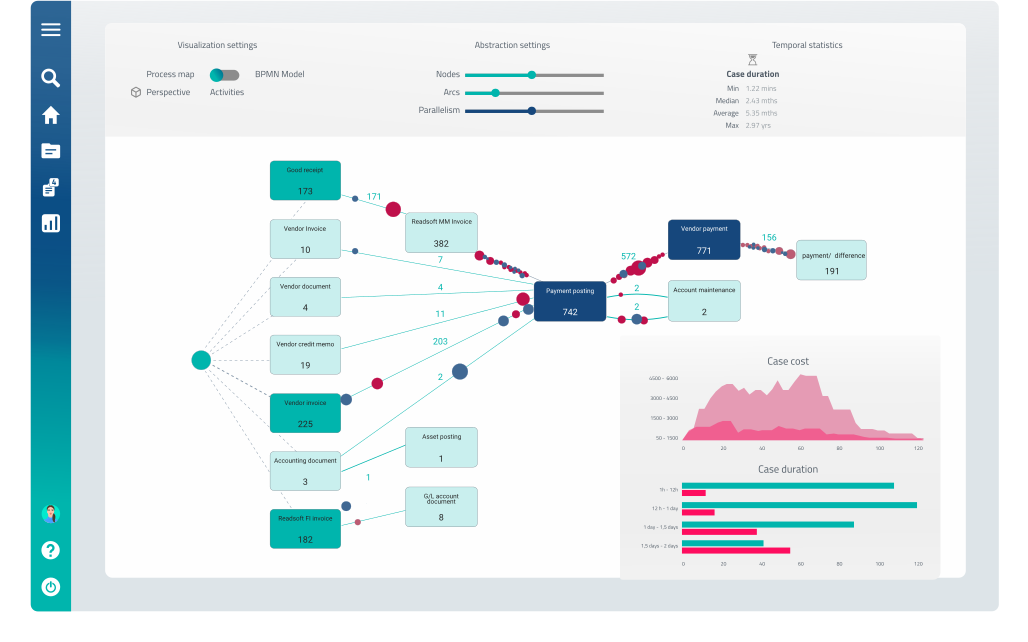
Unlock crucial insights from hidden process data and swiftly eliminate weak points.
Use Case
Understand & Transform
BIC Process Design

Process Excellence
Optimize your workflows for maximum performance and efficiency.

Digital Transformation Projects
Pave the way for your digitization project with a process-driven approach.

Integrated Management System
Align various management systems and leverage synergies.

Quality Management
Set new standards for excellence in quality management.

SAP S/4HANA Transformation
Successfully navigate SAP S/4HANA migration or implementation projects.
Structure and Streamline
BIC EAM
Business Enterprise Architecture
Align your business strategy and IT landscape in perfect harmony.

Business Capability Mapping
Gain clear insights to seamlessly align strategy, processes, and IT.
IT Landscape Transformation
Transform your IT landscape to agilely navigate the digital transformation.
IT Rationalization
Optimize your IT landscape for maximum performance and efficiency.

Technology Risk Management
Protect your business from risks and foster stability for innovation.
Automate & Orchestrate
BIC Process Execution

HR Workflow Automation
Shape the future of Human Resources with automated processes.

IT Workflow Automation
Relieve your IT department from time-consuming routine tasks with automated workflows.
Approval Workflow Automation
Automate your approval workflows and accelerate decision-making.

Forms Automation
Simplify data collection and processing with automated forms.
Secure & Comply
BIC GRC

ESG Management
Enhance social responsibility and environmental impact while adhering to governance standards.

Outsourcing Management
Keep the security of your outsourced processes in mind at all times.
Risk Simulation
Proactively simulate risks and be prepared for potential crisis situations.

Compliance Management
Monitor compliance, mitigate risks, and quickly adapt to new requirements.

IT and Cyber Security
Manage IT risks, comply with regulations, and protect your most valuable company assets.

MaRisk
Benefit from comprehensive risk management to fulfill BaFin's requirements fully.

NIS-2
Achieve NIS2 compliance with integrated IT risk management and automated workflows.
Industries

Automotive
Gain new insights for excellent processes and an improved customer experience.

Education & Universities
Spot improvement potentials in your administrative and teaching processes effortlessly.

Energy & Utilities
Uncover bottlenecks and potential savings in your processes systematically.

Finance & Insurance
Create secure and reliable processes in a highly regulated environment.

Healthcare
Improve efficiency through optimized, digital processes in healthcare.

Logistics
Optimize supply chains and uncover potential savings in your supply chain processes.

Manufacturing
Exploit the potential in your procurement, production, and transportation processes.

Pharma & Chemistry
Enhance your processes and ensure compliance with regulatory standards.

Public
Accelerate digitalization and pinpoint areas for process improvement.

Real Estate & Construction
Unlock potential savings in marketing and administration of your construction projects.

Other Industries
Unlock significant cost savings while simultaneously boosting process efficiency.
All Resources
Webinars & Events
Whitepaper
Wiki

Process Management
Accelerate growth. Optimize your business processes for peak performance.

Enterprise Architecture
Align systems, drive efficiency. Transform your enterprise for the future.

Process Automation
Work smarter, not harder. Let automation enhance productivity and drive your success.

Process Mining
Shine a light on your processes. Discover inefficiencies and power your progress.

Governance, Risk & Compliance
Protect what matters. Strengthen your operations with structure and security.
Blog
Success Stories
Product Information
Business processes are the heart of any organization. Only if they run smoothly, a company can be successful in the long term and keep its resolutions. Business Process Management is the elementary basis for continuously optimizing processes and leading companies into full automation and digitalization. This article first explains Business Process Management (BPM) as a management discipline: what BPM is, why it matters, how the BPM lifecycle works, and which advantages it brings. In the second step, you will see how BPM software supports these methods in practice and helps you increase efficiency, transparency, and automation.

Table of Contents
Author
Gregor Greinke

Business process management is a method for designing, executing, analyzing and continuously improving the processes in an organization in a goal-oriented manner. Graphical notations such as the event-driven process chain (EPC) or Business Process Model and Notation (BPMN) can be used to graphically depict the processes in the company in a clear manner, which forms a basis for professional business process management.
The uniform modeling language BPMN 2.0 is currently a widely used standard for business process modeling. The central question, "Who does what, when and with what tools?" can be easily answered with BPM because it includes all areas of an organization in the analysis, from employees to systems to customers, suppliers and partners. With BPM, all processes can thus be defined and various business processes can be reflected transparently.
The goal of this concept is to use all information about the company's processes and align them with the achievement of business goals. Only those who know their existing processes from start to finish and how they work, can optimize them, adapt them to customer needs and, as a result, achieve their business goals more quickly and efficiently.
Since the processes and goals in the company change continuously, business process management should be viewed less as a one-time project and more as a continuous activity for process improvement.
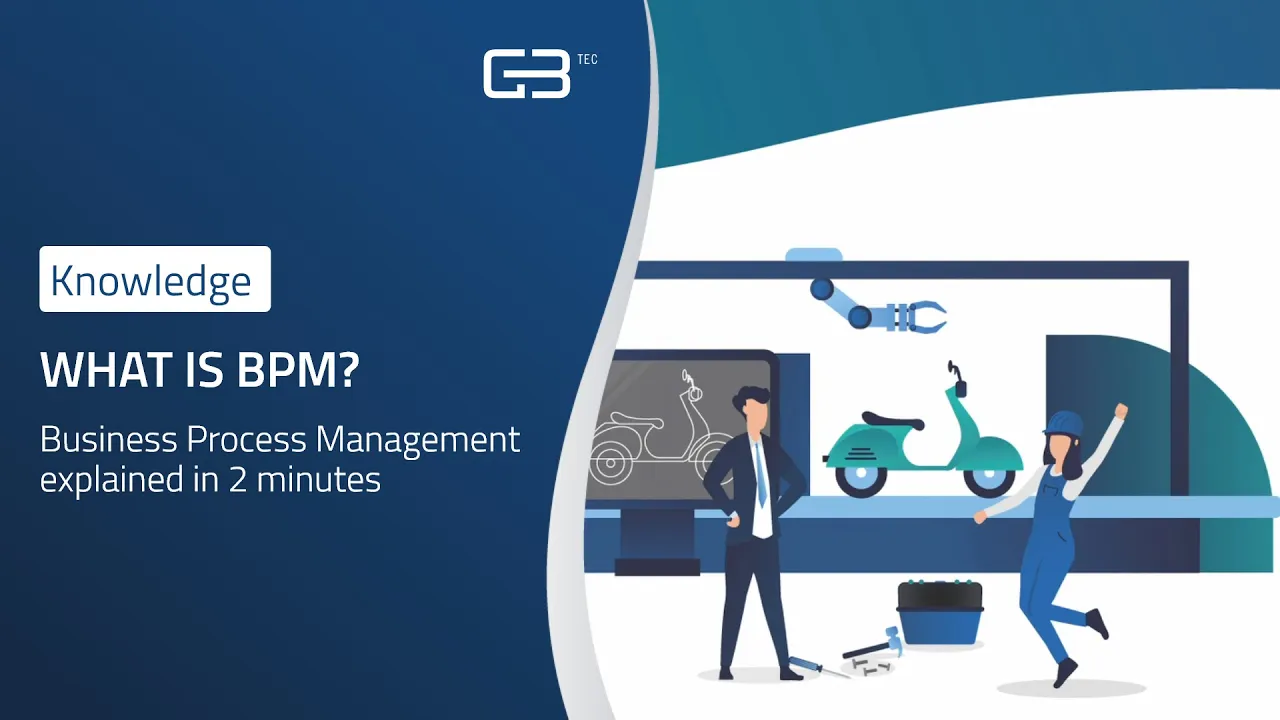
Business processes form the core of every organization. They must operate effectively for companies to achieve their goals and differentiate themselves from competitors in the long term.
A BPM solution as the foundation of digital transformation is a key driver of success. With a comprehensive digital view of the entire business, organizations can continuously evaluate and improve their structures and processes, uncover new potential and business opportunities, and use data-driven insights to align their offerings with customer needs. This leads to end-to-end transparency, faster process execution, and greater flexibility through automation.
A deeper understanding of processes—combined with continuous optimization and automation—significantly reduces errors, saves time, and prepares organizations to address new challenges and industry trends. Supported by a BPM system, these developments can be translated into structured workflows and even entirely new business models.
Business Process Management therefore forms the foundation for higher productivity and efficiency and is indispensable for maintaining long-term success in a competitive market.
The various BPM activities can be visualized as a control loop, a central element of effective process management. This loop provides deep insight into the process landscape and reveals opportunities for improvement. Because organizations operate in dynamic environments and continually adapt their processes and goals, the individual phases of the BPM lifecycle run iteratively, ensuring ongoing optimization.
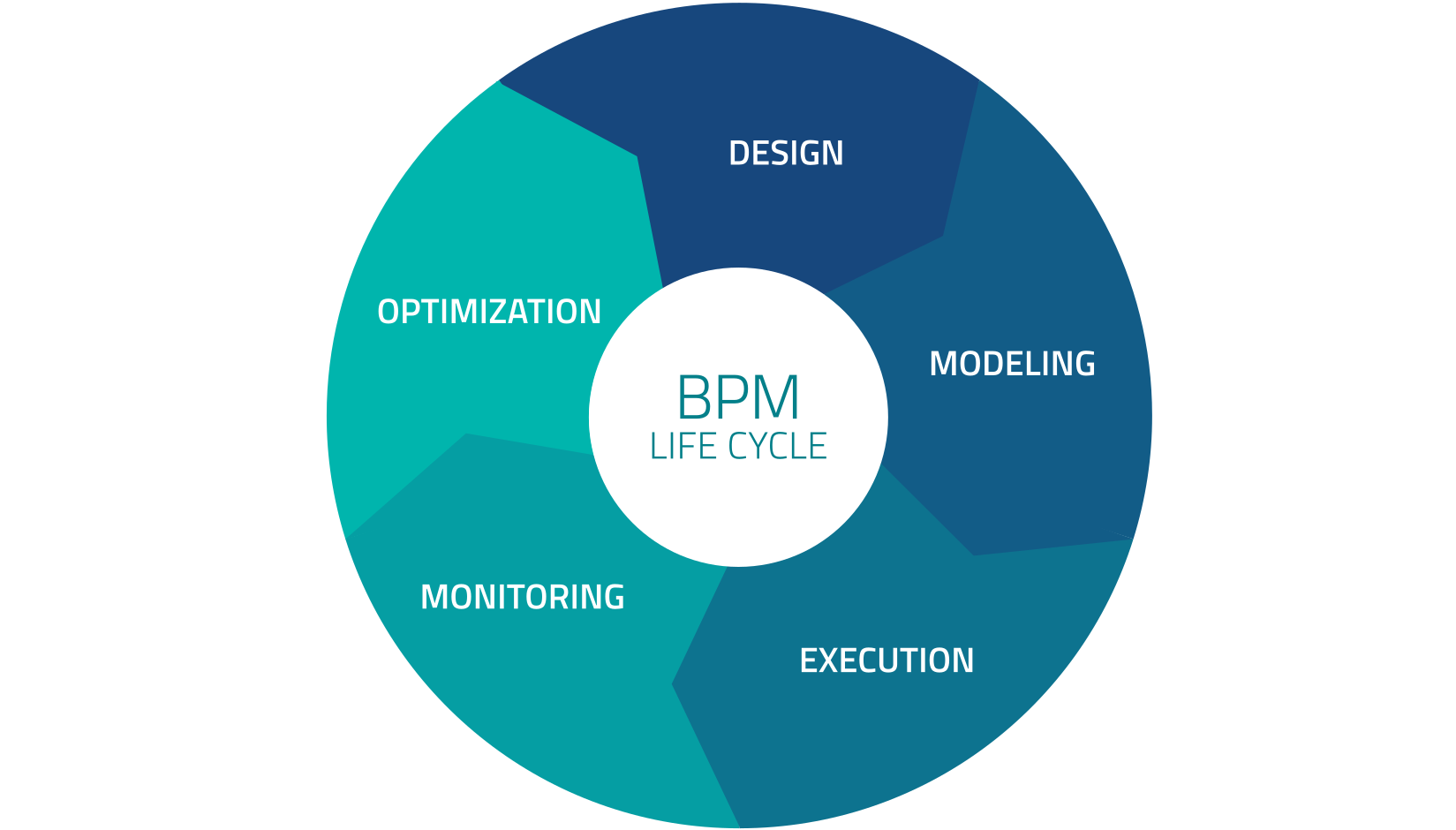
1. Design
The first step involves analyzing existing processes. At the same time, specific goals are defined that the organization aims to achieve through BPM.
2. Modeling
In the modeling phase, the company selects new processes and adapts them based on its own requirements.
3. Execution
The modeled business processes are recorded and documented. They are then implemented within a process model, published in the internal IT system, and executed.
4. Monitoring
In this phase, processes are continuously monitored and analyzed. Actual performance is compared against the modeled target specifications to identify opportunities for optimization. Only those with a deep understanding of the critical aspects of their processes can develop effective solutions and implement them efficiently.
5. Optimization
Based on the insights gained, processes are continuously improved, and target objectives are implemented. Using classic process optimization approaches such as Kaizen or Six Sigma, the focus is on continuously enhancing throughput, cost efficiency, error rates, and other key performance indicators, often through process automation or integration.
With each process adjustment, a new design phase begins, completing the BPM lifecycle and restarting the control loop. Measuring progress and driving continuous improvement is only possible when processes pass fully through this control loop and all phases of the lifecycle are considered.
By adopting a systematic and continuously improving digital business process management strategy, companies can achieve a multitude of valuable benefits. Even without dedicated BPM software, consciously designed and well-managed processes already offer substantial gains in efficiency and productivity.

Automation and optimization of business processes
Smooth and standardized processes significantly increase operational performance. Automation reduces cycle times and minimizes the need for manual controls, saving valuable time and lowering error rates.

Transparent and consistently documented end-to-end business processes
Clearly documented workflows create transparency across the entire process chain. This visibility makes bottlenecks, unnecessary waiting times and handovers easy to identify and ensures that responsibilities are well defined, preventing tasks from falling through the cracks.

Efficient workflow management and system combinations
With BPM, companies design, test and implement workflows that integrate people, data and systems. Ranging from no-code/low-code solutions to more advanced platforms, both IT and non-IT teams can build workflows that support process execution and connect systems effectively.

Continuous monitoring and data-based
analysis
Real-time monitoring and measurement provide the foundation for ongoing optimization. Defined KPIs and target/actual comparisons reveal deviations, establish benchmarks, and make data-driven decisions possible.

Shift to an agile and process-oriented organization
BPM helps organizations anchor processes deeply within their operations and align them with customer needs and business objectives. This ensures that process improvements directly support strategic goals rather than becoming isolated optimization initiatives.
More transparency thanks to reduced system and process complexity
Digitalizing and restructuring manual steps reduce human intervention and process complexity. This leads to greater stability, clearer workflows and improved overall transparency.
Quick Wins
Various improvements such as standardized workflows, clearer responsibilities and better alignment with goals can be achieved simply by adopting BPM principles. Companies often realize tangible benefits early, even before deploying a full BPM suite.
The terms BPM and BPMN are often used interchangeably, but what do they actually mean?
BPM (Business Process Management) is the management discipline. It covers strategy, governance, roles, methods and the continuous improvement of business processes. BPMN (Business Process Model and Notation) is a standardized modeling language for describing processes in a way that both business and IT can understand.
In short: BPM is what you do, BPMN is how you visualize it. BPMN diagrams are one of the central tools used within Business Process Management to document and communicate processes in a BPM initiative.
Not every BPM initiative looks the same. Depending on the focus, organizations may adopt different types of Business Process Management. Here are some examples:

Focuses on processes with many human interactions and approvals, such as HR, customer service or procurement. The aim is to support collaboration and define clear responsibilities.
Concentrates on connecting IT systems (for example ERP, CRM or specialist applications) and orchestrating data flows across system boundaries.

Targets processes that revolve around documents and forms, including routing, approvals and archiving.

Combines classic BPM with technologies such as process mining, artificial intelligence (AI) and advanced analytics to automatically detect patterns, identify bottlenecks and suggest improvements.
A modern BPM approach is often a combination of each type of BPM, creating an end-to-end, process-oriented organization.
Once BPM is established as a method, the question that arises is how it can be operationalized digitally. BPM software helps bring the BPM method to life in day-to-day operations.
A BPM tool is typically used to:
In other words, BPM software translates and digitalizes the conceptual ideas of Business Process Management into concrete, repeatable and measurable workflows in your organization.
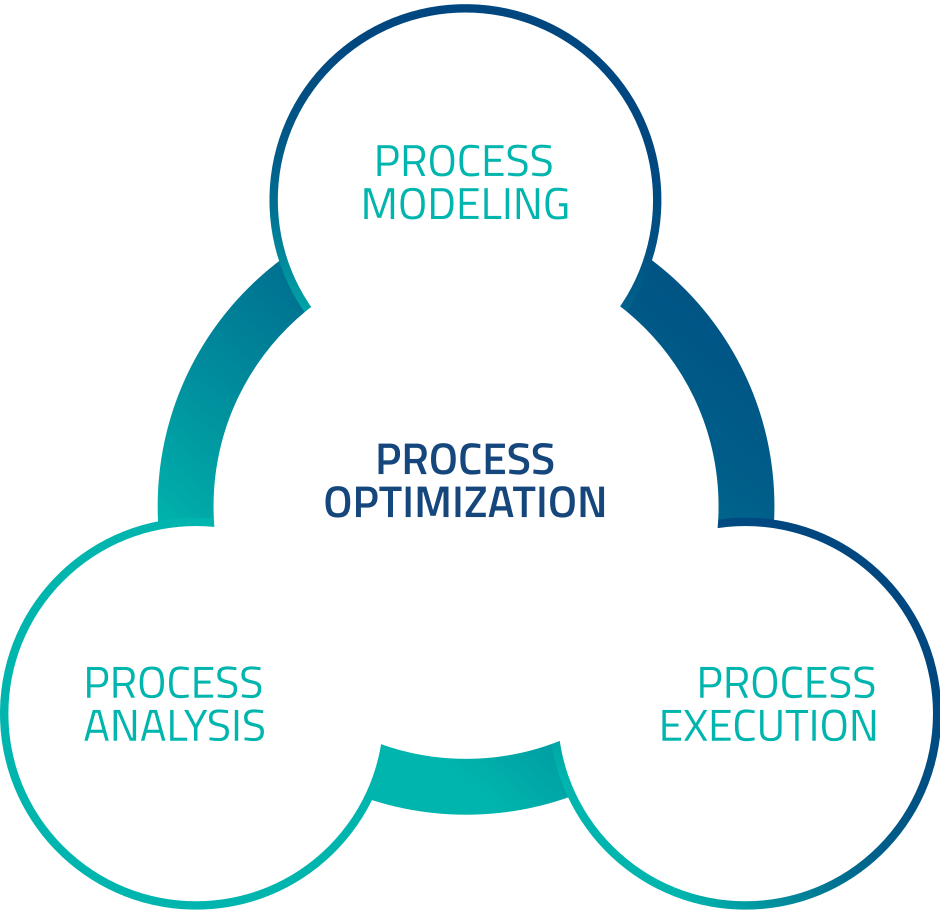
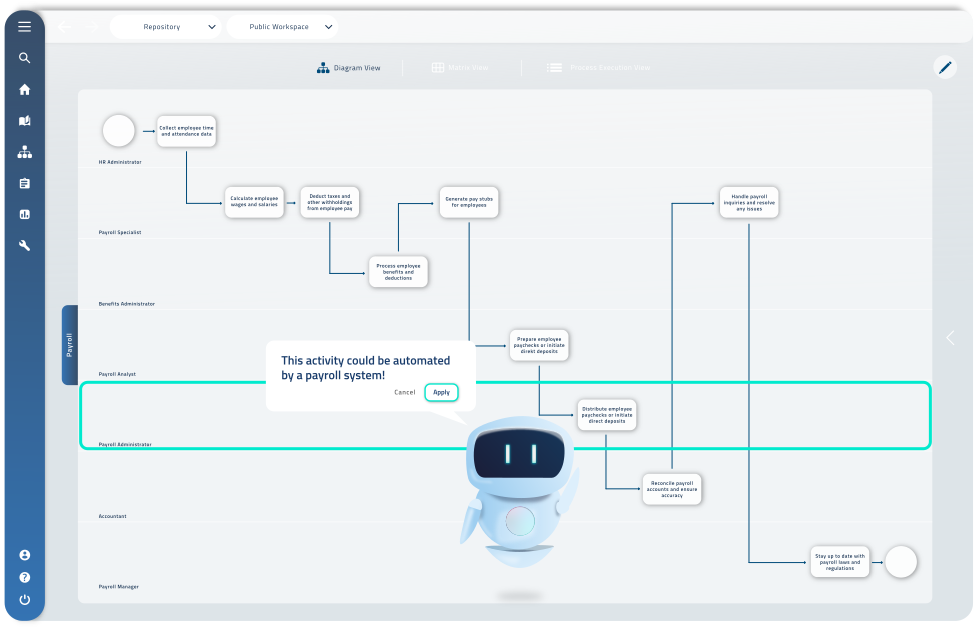
BPM software significantly increases the efficiency and productivity gains of BPM by:
Selecting the right BPM software is a strategic decision. A strong BPM solution helps you not only to model processes, but to execute, measure and continuously improve them on one platform.
Important criteria include:
intuitive modeling and navigation for business users, not only BPM experts
especially BPMN 2.0, but also support for other notations if needed
integrated workflow engine with no-code and low-code options
KPIs, reports and deep insights into real execution
interfaces and APIs for ERP, CRM, HR and specialist systems
the tool should grow with your organization and user base
ability to define roles, permissions, versioning, and audit trails
intelligent assistants for modeling, documentation, analysis and recommendations
cloud vs. on-premises, certifications and data protection
When evaluating BPM tools and Business Process Management Software, it’s helpful to ask providers questions such as:


Even the best BPM solution cannot compensate for fundamental project mistakes. Typical pitfalls include:
A clear BPM strategy, combined with iterative implementation, helps to avoid these mistakes and deliver quick, visible results.
Many SMEs wonder whether a dedicated BPM tool is only relevant for large corporations. In practice, deciding whether to opt for a BPM software is less dependent on the size of the company, but the complexity and requirements of the business’ processes. BPM software can also benefit small and medium-sized enterprises when:

Processes are becoming more complex and cross-departmental

Manual workarounds with spreadsheets and emails increase the risk of errors

Certification or regulatory requirements (e.g. ISO standards) need to be met
Growth and digitalization projects demand clear, scalable processes
For truly end-to-end processes, a Business Process Management Tool must integrate seamlessly into the existing IT landscape.

In addition to pure process modeling, professional BPM software integrates best-of-class technologies such as Robotic Process Automation (RPA), artificial intelligence, and process mining. Process mining, in particular, forms a fundamental basis for comprehensive business process automation, which is an essential component of digital transformation. By analyzing real transaction data, process mining technologies create objective, tool-based transparency and identify automation and optimization potential at an early stage.
RPA can be used to automate workflows by having software robots take over repetitive tasks. In RPA tools, structured content can be created for this purpose and software bots can be configured to process transactions and communicate with other digital systems.
The use of these new technologies generates significant competitive advantages, including higher process speed, cost savings, improved process quality, and more effective employee utilization. However, to avoid automating processes that add little value, organizations must take a holistic view of their process landscape. Instead of deploying isolated bots, they should implement process-specific automation solutions that align with end-to-end workflows. A well-designed BPM solution provides the framework needed to enable this integrated, strategic approach.
Discover our holistic BPM suite, BIC Platform, and unlock the many advantages of professional Business Process Management software. Whether its process modeling, execution, measurement, or optimization, our powerful modules (BIC Process Design, BIC EAM, BIC Process Execution and BIC GRC) help you get the most out of your processes and accelerate digital transformation across your organization.
All modules can be combined freely to match your exact requirements, ensuring you achieve your business goals efficiently. BIC stands for cutting-edge technology, modern design, and outstanding usability. See for yourself whether BIC is the right BPM software for your organization.
Those who actively embrace the challenges of digital transformation and view change as an opportunity will set the course for long-term success. An innovative BPM solution provides the foundation organizations need to execute their business strategy and manage transformation effectively. Existing processes can be optimized and automated where possible, while new business models can be established holistically across cross-functional workflows.
Yet the ongoing shifts in IT landscapes and business processes continuously raise new demands on process management. Holistic change is therefore more critical than ever for companies aiming to sustainably increase efficiency, enhance quality, and achieve goal-oriented standardization.
In the long run, effective Business Process Management enables organizations to better manage growing process complexity, adapt more quickly to change, and deliver an improved customer experience through higher-quality, data-driven products and services. The ultimate benefit: standing out from the competition and securing long-term market success.
Founder
Gregor, founder of GBTEC, is a leading expert in Business Process and IT Transformation. For over 20 years, he has been a key figure shaping the BPM world. His passion for designing efficient processes emerged during his studies in business informatics. As the mastermind behind the BIC Platform, Gregor and the GBTEC team develop a comprehensive software suite that covers the entire transformation cycle — from intelligent Business Process Management (iBPM) and Enterprise Architecture Management (EAM) to Digital Process Automation (DPA), Process Mining and Governance, Risk and Compliance (GRC).
We have the information you need to unleash your full process potential. Take a look at our resources and start improving your business performance today.
GBTEC Software AG
Gesundheitscampus-Süd 23
44801 Bochum
Germany