




The Enterprise Architecture intelligence your CIO is missing
 24 June 2026
 Enterprise Architecture Management (EAM) is meant to connect business processes, applications, data and technologies so that business leaders can make well-informed decisions. Rather than being a purely technical function, it provides transparency into which systems support which processes – and how changes to one part of the organisation can affect everything else.
In theory, this makes Enterprise Architecture one of the most powerful sources of decision intelligence a CIO has. In reality, however, that potential rarely reaches the boardroom.
Architecture is a strategic asset. Most organisations are not treating it that way.
Enterprise Architects have spent decades building increasingly sophisticated models of their organisations’ technology landscapes. The tools have improved, the methodologies have matured, and the frameworks such as TOGAF, ArchiMate and Zachman have created rigorous foundations for architectural thinking.
Yet in most organisations, Enterprise Architecture is still treated as a technical support discipline rather than a strategic intelligence capability. Architecture models live in repositories that leadership rarely visits. EA teams are consulted during technology procurement and called in when transformation projects encounter challenges – not engaged at the point where strategic decisions are made.
This is not a leadership problem. It is a presentation problem and ultimately a lack of executive architecture intelligence.
Most EAM tools document the business as it was designed to work. Few remain connected to how the business actually operates today. As a result, valuable architectural insights rarely reach the boardroom in a form leaders can use.
Why Enterprise Architecture is not reaching the boardroom
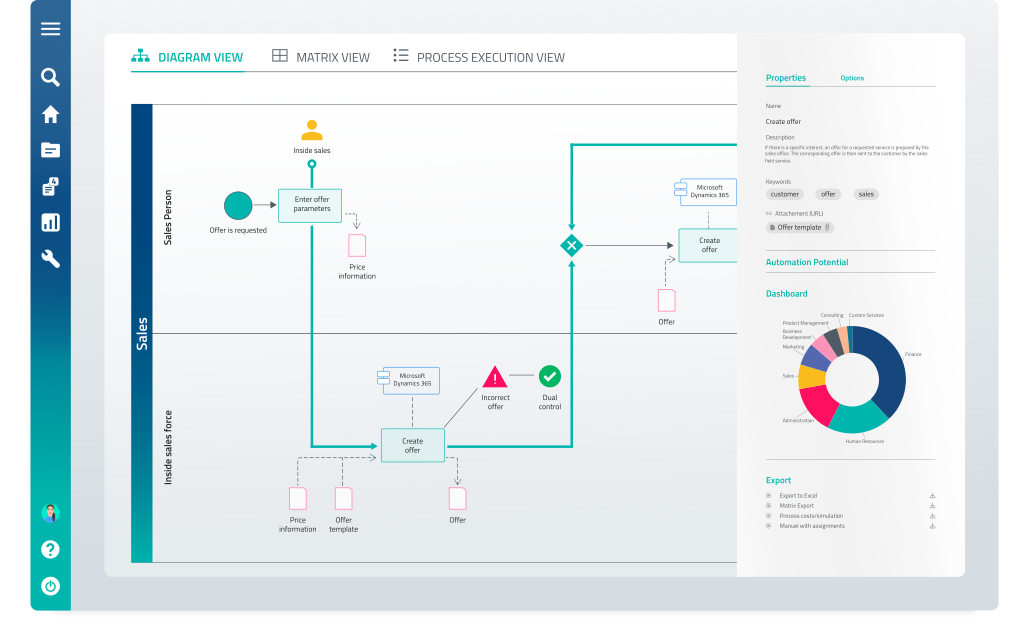
Traditional Enterprise Architecture outputs, like detailed process models, application dependency maps or system integration diagrams, are designed for architects and technology teams. They are not designed for executives making strategic decisions.
A CIO who needs to decide whether to consolidate two business units’ technology platforms does not need a BPMN diagram but rather clear, visual answers to three questions:
- Which systems support which processes?
- Which teams depend on those systems?
- What happens to operations if we change them?
Most traditional EAM tools cannot answer these questions in the format a CIO actually needs – quickly, visually and connected to operational reality. The result is a persistent gap between what architects know and what leaders can actually act on. CIOs end up receiving technical diagrams instead of actionable architecture insights, and impact analyses take weeks because the underlying data is not connected. Architecture remains valuable, but its value rarely reaches the boardroom.
The BPM-EAM bridge
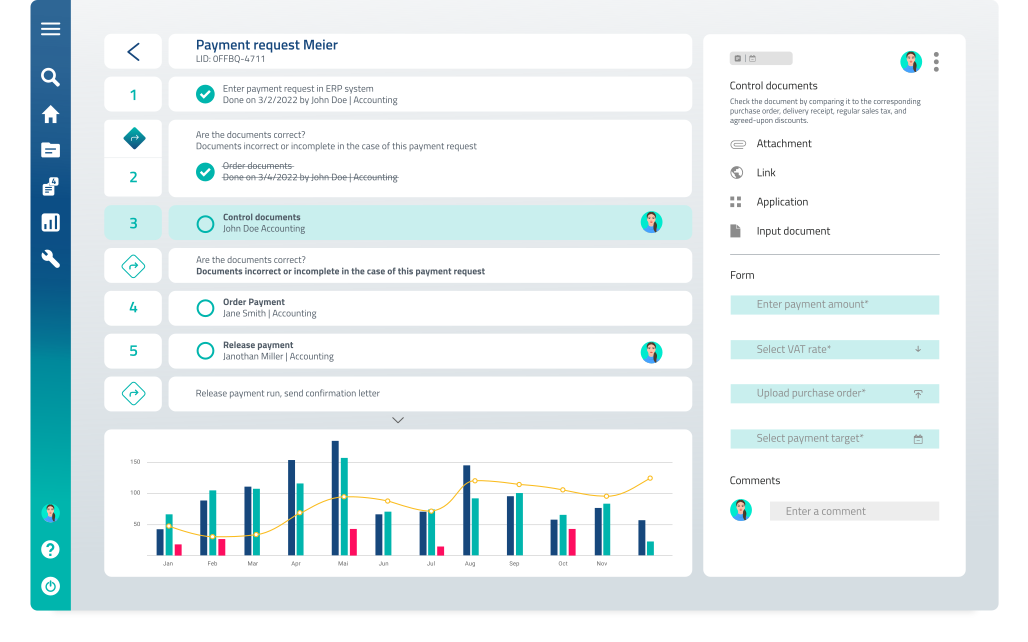
The organisations closing this gap are doing so by connecting their architecture layer to their process layer. When EAM and Business Process Management (BPM) share a single data model, architecture models become operationally grounded – and operationally grounded models can be presented at any level of abstraction, from technical detail to executive summary. This is what process-to-architecture integration makes possible: real-time architecture visibility that leadership can actually use.
MS Amlin, a leading Lloyd’s Syndicate and part of the MS&AD Insurance Group, demonstrated this directly. Starting with GBTEC Process Design to map their end-to-end processes, the team created an executive-level ‘Process Map’, a navigable, visual representation of the entire business, that was presented to and immediately endorsed by C-suite leadership.
They are now extending this into GBTEC Enterprise Architecture, building a North Star blueprint of their target operating model coordinated between their London operations and their head office in Tokyo.
“Process modelling is not about drawing flowcharts. It is about building a living blueprint of the business – one that answers the questions the executive committee is asking today, and the ones it will ask tomorrow.” – Neil Williams, Business Architecture and Analysis Team Lead, MS Amlin
What CIOs actually need from Enterprise Architecture
Based on the strategic questions that leadership teams ask most frequently, the architecture capability a CIO actually needs for strategic decision-making delivers four things:
- Real-time visibility: Understand which systems support which critical processes so that technology decisions are always made with full operational context.
- Impact assessment before implementation: Identify the consequences of technology changes during planning rather than discovering them during delivery.
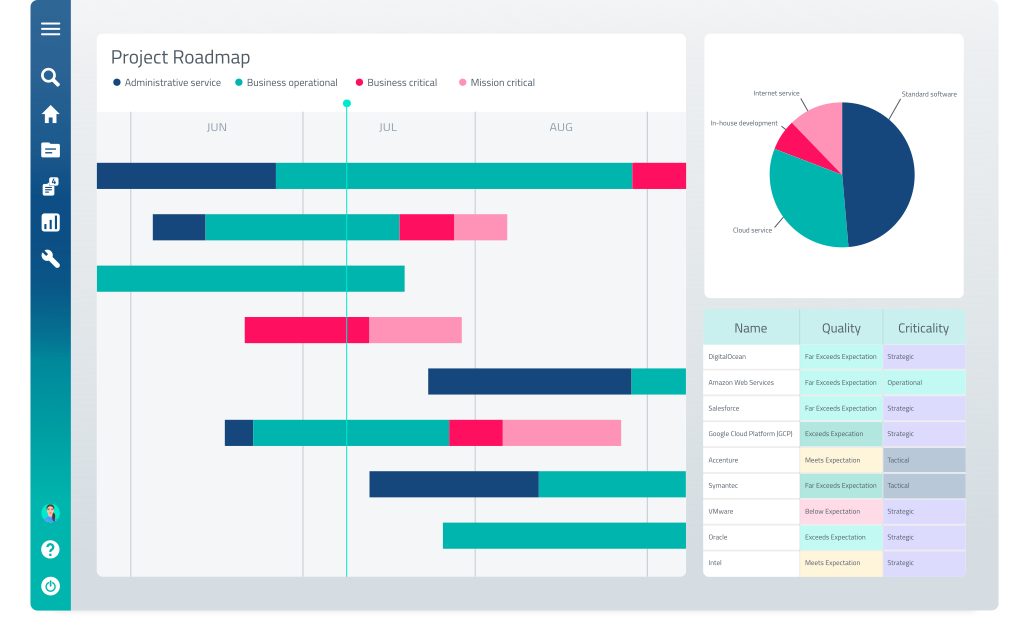
- Application portfolio intelligence: Focus investment on systems that create value while identifying opportunities for consolidation and rationalisation.
- An AI-ready foundation: Provide the architectural transparency and process context required to deploy AI and automation responsibly.
Together, these are the capabilities that transform EAM from a technical discipline into a architecture for strategic decision making – and they are the capabilities that GBTEC Enterprise Architecture delivers natively as part of the Unified Transformation Suite.
The business value of connecting process and architecture
The business case for process-connected architecture is becoming increasingly clear. Customers using GBTEC Enterprise Architecture within the Unified Transformation Suite report planning cycles cut by up to 50%, six-to-seven-figure savings from application rationalisation, and a 40–60% reduction in audit preparation time.
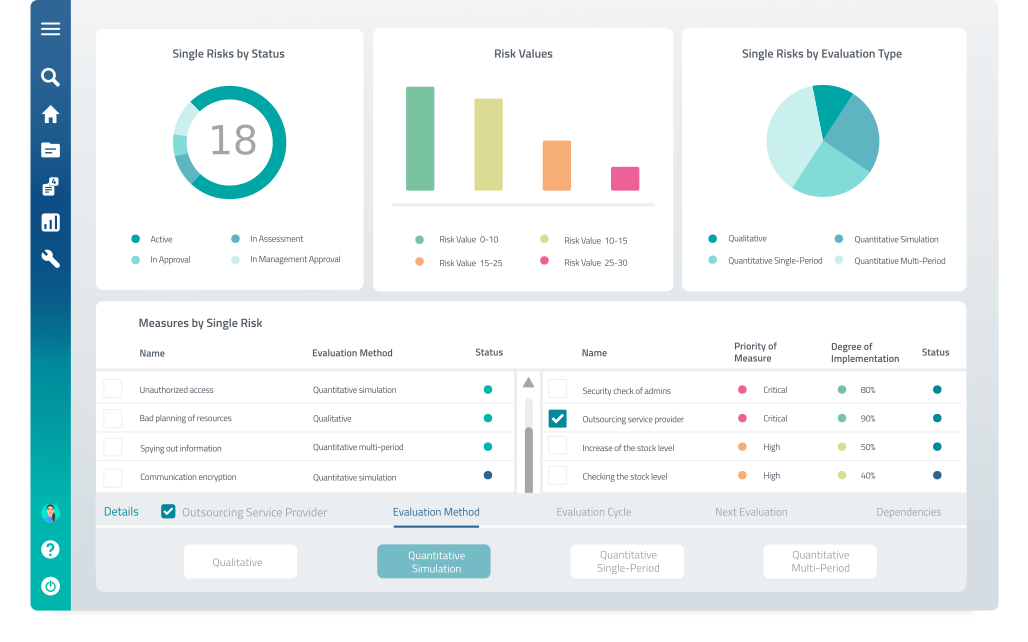
The organisations investing in connected architecture and process intelligence now are building a strategic advantage that will compound over the next decade. Because GBTEC Enterprise Architecture is natively unified with BPM and GRC within the GBTEC Platform, organisations can move from architecture transparency to transformation governance without relying on complex integrations or disconnected tools.
Frequently asked questions
Why is Enterprise Architecture not reaching the boardroom?
The core issue is that traditional EAM tools produce outputs designed for architects – detailed diagrams, dependency maps, integration schemas – rather than for the executives who need to act on architectural insights. Without a layer that translates operational complexity into clear, visual, decision-ready intelligence, architecture stays in the repository and off the leadership agenda. The fix is not better presentation skills; it is tools that are built to bridge the gap between technical depth and executive clarity.
What do CIOs need from Enterprise Architecture?
CIOs need Enterprise Architecture to answer four questions quickly and reliably: which systems support which critical processes; what the impact of a technology change will be (before it is made); where the application portfolio is generating or destroying value; and whether the infrastructure is sound enough to build AI and automation on. When EAM can answer these questions in real time, it stops being a technical support function and becomes a core input to IT strategy alignment and executive decision-making.
Why do traditional EAM tools often fail CIO expectations?
Traditional EAM tools fail CIO expectations primarily because they operate in isolation from the operational layer of the business. They capture architecture as it was designed, not as it currently runs. Impact analyses are slow because the data is not connected, portfolio views are incomplete because process dependencies are not mapped and the outputs (however technically accurate) are not formatted for executive consumption. The result is that architecture intelligence stays locked in a tool that leadership has little reason to open.
How does process–architecture integration help CIOs?
When BPM and EAM share a single data model, CIOs gain something traditional tools cannot provide: an architecture view that is continuously grounded in operational reality. Process changes surface immediately as architectural implications; system modifications show which processes are affected; and impact analyses that previously took weeks can be generated in hours. This process-to-architecture integration is what makes it possible to present architecture insights at any level of abstraction, from engineering detail to boardroom summary.
How can Enterprise Architecture support strategic decisions?
Enterprise Architecture supports strategic decisions by making visible what is otherwise hidden: the dependencies between technology systems and the business processes they support. When that visibility is available in real-time and based on connected data, rather than on a static model updated quarterly, it can inform decisions about platform consolidation, technology investment, organisational restructuring, and AI deployment before those decisions are made. That shift from reactive documentation to proactive decision support is what turns Enterprise Architecture Management into a strategic asset for CIOs.
GBTEC Software AG
Gesundheitscampus-Süd 23
44801 Bochum
Germany
