BIC Process Design
Understand & Transform
Supercharge your business operations with the most intuitive AI-powered BPM software.
It seems that you come from a German speaking country. Here you can change the language
English
Products by GBTEC
BIC Process Design
Understand & Transform
BIC Process Design
Understand & Transform
Supercharge your business operations with the most intuitive AI-powered BPM software.
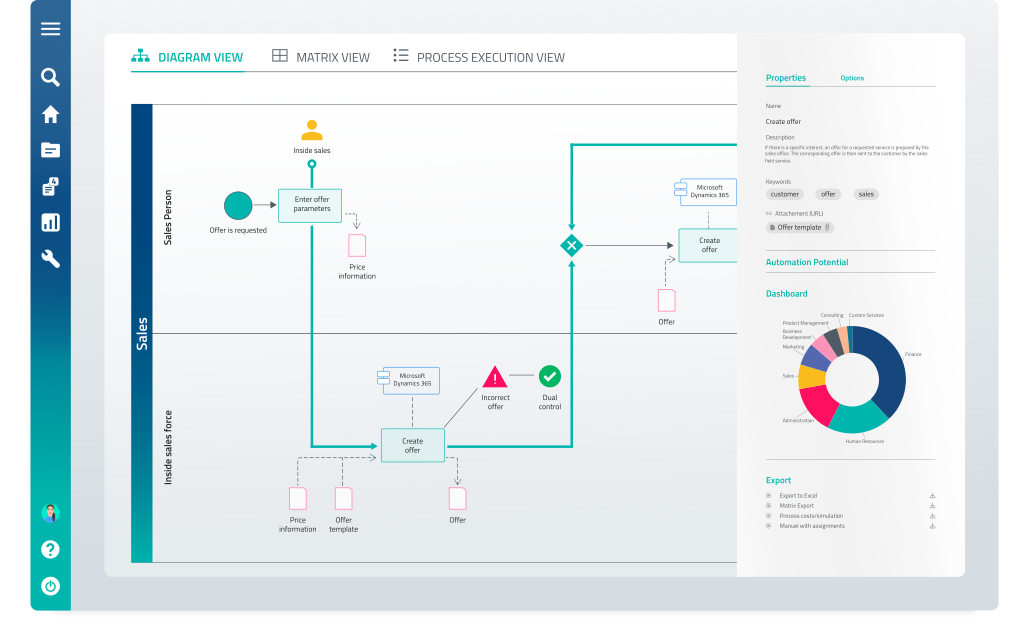
BIC EAM
Structure & Streamline
BIC EAM
Structure & Streamline
Reduce IT costs and accelerate your IT transformation with our intelligent EAM solution.
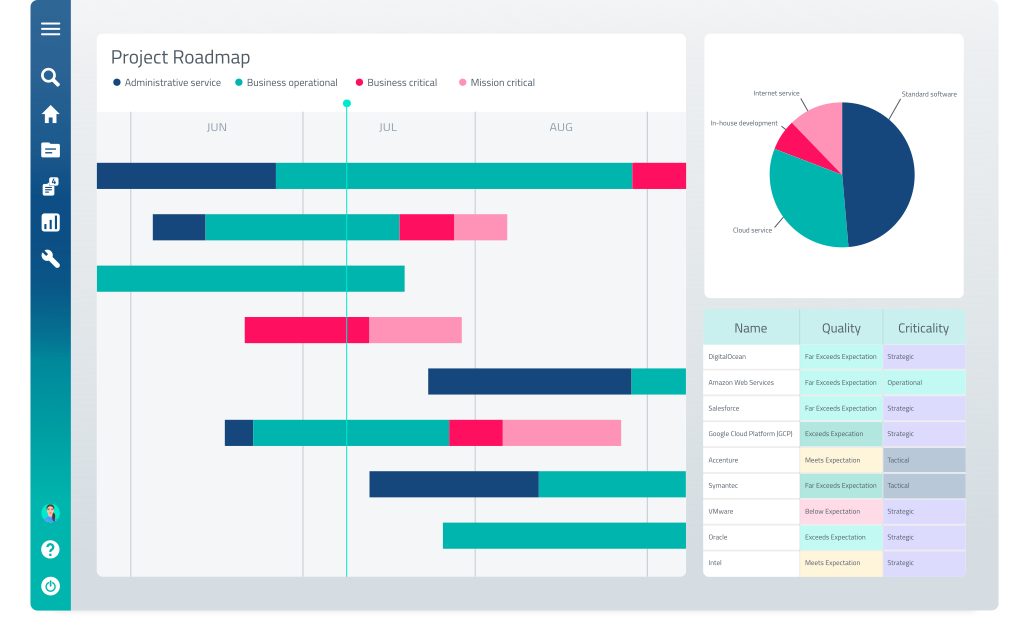
BIC Process Execution
Automate & Orchestrate
BIC Process Execution
Automate & Orchestrate
Redefine the way you work with record-breaking workflow automation.
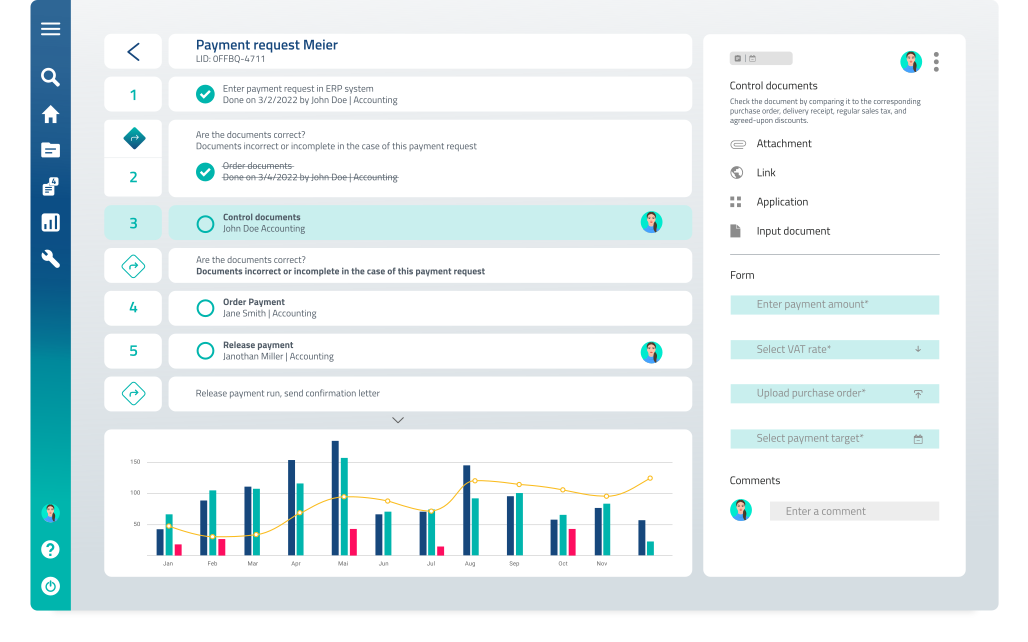
BIC GRC
Secure & Comply
BIC GRC
Secure & Comply
Explore our comprehensive GRC platform tailored to meet your needs.
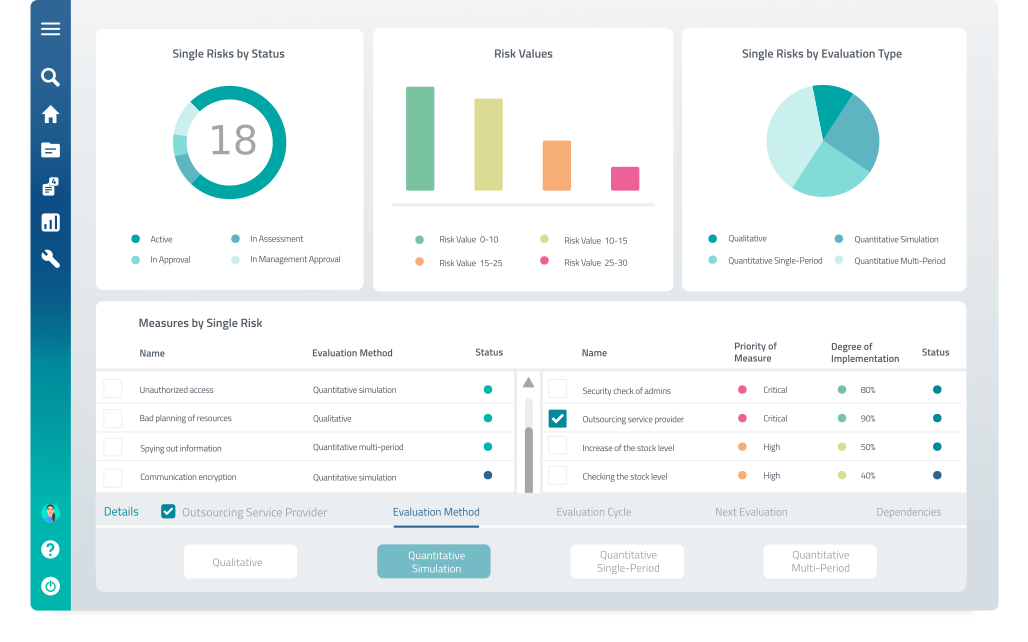
Apromore Process Mining
Reveal & Accelerate
Apromore Process Mining from Salesforce
Reveal & Accelerate
Unlock crucial insights from hidden process data and swiftly eliminate weak points.
Use Case
Understand & Transform
BIC Process Design

Process Excellence
Optimize your workflows for maximum performance and efficiency.

Digital Transformation Projects
Pave the way for your digitization project with a process-driven approach.

Integrated Management System
Align various management systems and leverage synergies.

Quality Management
Set new standards for excellence in quality management.

SAP S/4HANA Transformation
Successfully navigate SAP S/4HANA migration or implementation projects.
Structure and Streamline
BIC EAM
Business Enterprise Architecture
Align your business strategy and IT landscape in perfect harmony.

Business Capability Mapping
Gain clear insights to seamlessly align strategy, processes, and IT.
IT Landscape Transformation
Transform your IT landscape to agilely navigate the digital transformation.
IT Rationalization
Optimize your IT landscape for maximum performance and efficiency.

Technology Risk Management
Protect your business from risks and foster stability for innovation.
Automate & Orchestrate
BIC Process Execution

HR Workflow Automation
Shape the future of Human Resources with automated processes.

IT Workflow Automation
Relieve your IT department from time-consuming routine tasks with automated workflows.
Approval Workflow Automation
Automate your approval workflows and accelerate decision-making.

Forms Automation
Simplify data collection and processing with automated forms.
Secure & Comply
BIC GRC

ESG Management
Enhance social responsibility and environmental impact while adhering to governance standards.

Outsourcing Management
Keep the security of your outsourced processes in mind at all times.
Risk Simulation
Proactively simulate risks and be prepared for potential crisis situations.

Compliance Management
Monitor compliance, mitigate risks, and quickly adapt to new requirements.

IT and Cyber Security
Manage IT risks, comply with regulations, and protect your most valuable company assets.

MaRisk
Benefit from comprehensive risk management to fulfill BaFin's requirements fully.
Industries

Automotive
Gain new insights for excellent processes and an improved customer experience.

Education & Universities
Spot improvement potentials in your administrative and teaching processes effortlessly.

Energy & Utilities
Uncover bottlenecks and potential savings in your processes systematically.

Finance & Insurance
Create secure and reliable processes in a highly regulated environment.

Healthcare
Improve efficiency through optimized, digital processes in healthcare.

Logistics
Optimize supply chains and uncover potential savings in your supply chain processes.

Manufacturing
Exploit the potential in your procurement, production, and transportation processes.

Pharma & Chemistry
Enhance your processes and ensure compliance with regulatory standards.

Public
Accelerate digitalization and pinpoint areas for process improvement.

Real Estate & Construction
Unlock potential savings in marketing and administration of your construction projects.

Other Industries
Unlock significant cost savings while simultaneously boosting process efficiency.
All Resources
Webinars & Events
Whitepaper
Wiki

Process Management
Accelerate growth. Optimize your business processes for peak performance.

Enterprise Architecture
Align systems, drive efficiency. Transform your enterprise for the future.

Process Automation
Work smarter, not harder. Let automation enhance productivity and drive your success.

Process Mining
Shine a light on your processes. Discover inefficiencies and power your progress.

Governance, Risk & Compliance
Protect what matters. Strengthen your operations with structure and security.
Blog
Success Stories
Product Information
Is your organization dealing with outdated systems, redundant applications, or IT costs spiraling out of control? Are you unsure whether your technology investments are delivering real business value? These challenges are common and often lead to inefficiencies, security risks, and misaligned IT strategies. Application Portfolio Management (APM) offers a structured way to regain control of your IT landscape, reduce waste, and uncover hidden opportunities. With APM, organizations can identify inefficiencies, optimize IT spending, and better align their application landscape with business goals, creating a scalable and future-ready IT environment.

APM is the practice of systematically optimizing and managing an organization’s software ecosystem to align with strategic business goals. This process includes categorizing applications, assessing their performance and value, and determining their future—whether to maintain, upgrade, replace, or retire them. By doing so, APM ensures that the application portfolio remains cost-efficient, efficient, and aligned with strategic objectives.
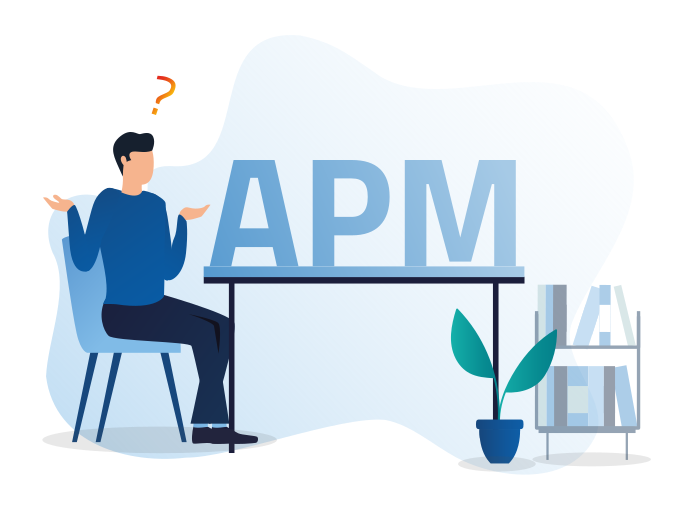
In today’s rapidly evolving digital landscape, technology is the backbone of business competitiveness. Organizations often adopt applications to address specific challenges, improve efficiency, or support new business goals as they evolve. However, when individual departments or employees procure applications without proper coordination, it can lead to an overgrown and disorganized IT ecosystem—commonly known as application sprawl. This phenomenon leads to:
APM ensures that every application adds value, supports strategic goals, and aligns with evolving business priorities. Data analytics within APM enables organizations to adapt to market changes and drive digital transformation more effectively.
With APM, you…
… enhance Risk Management
One of the most critical benefits of APM is the ability to address the risks posed by defunct or obsolete applications. When an application reaches the end of its lifecycle, it may malfunction, lose vendor support, or introduce vulnerabilities that compromise security and operational efficiency.
APM ensures organizations have a clear plan for managing end-of-life applications, whether through replacement, modernization, or retirement. By proactively addressing potential risks, businesses can protect their systems, maintain compliance, and prevent liabilities before they arise. Decision-makers are better equipped to mitigate risks proactively, preventing disruptions and ensuring the organization’s IT environment remains resilient.
… support strategic business goals
By categorizing and evaluating applications, organizations gain a complete view of their technology stack and its alignment with business priorities. By highlighting gaps, APM allows for resource prioritization and helps prioritize investments that support long-term goals. Applications nearing the end of their lifecycle can be phased out or replaced in coordination with broader initiatives, ensuring the IT ecosystem evolves in step with the company’s strategy.
… enable scalability and future readiness
APM identifies applications that may hinder growth, such as those with limited capacity or outdated functionality. By optimizing the portfolio, organizations can invest in scalable, modern solutions that accommodate evolving business requirements.
Additionally, APM ensures that new applications are evaluated against long-term objectives before adoption, reducing the risk of future redundancies. This forward-looking approach ensures the IT environment can seamlessly adapt to emerging challenges and opportunities.
… optimize IT spending
Understanding the balance between an application’s cost and its contribution to business success is key to managing IT expenses effectively. Hidden costs, such as overlapping tools or unused licenses, can be uncovered with a comprehensive application review.
Proactive financial planning ensures organizations avoid unexpected expenses tied to maintenance, upgrades, or decommissioning. By prioritizing high-value applications, businesses can optimize IT budgets and improve overall operational outcomes.
… streamline your processes
Application Portfolio Management streamlines workflows by addressing inefficiencies caused by redundant or underperforming tools. By analyzing how applications support core business processes, organizations can consolidate tools, eliminate gaps, and enhance automation, reducing manual effort and friction between systems.
APM also helps improve efficiency by identifying opportunities for better tool integration and aligning applications with scalable, efficient IT systems to meet evolving business needs.

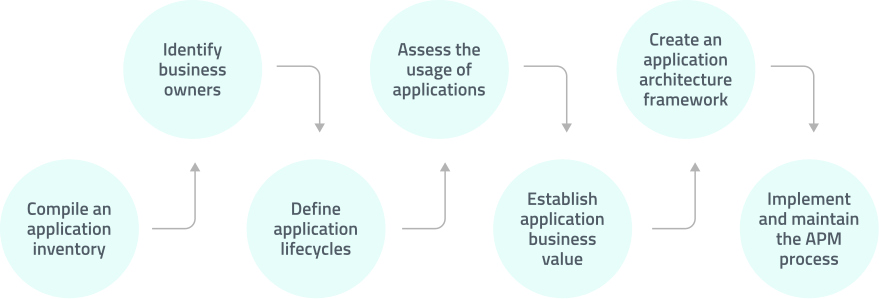
A successful APM initiative involves these steps:
Start by creating an inventory of all applications and software currently in use across the organization. Collaborate with each department to identify both actively used and unused applications. During this stage, it’s helpful to gather additional details, such as contract terms, associated costs, and integration dependencies, to streamline future evaluations.
Engage with the business owners responsible for administering each application. As daily users, they are key stakeholders in the APM process. Inform them of planned adjustments to the application portfolio and explain how these changes align with broader business goals. Their insights are invaluable for understanding application usage and potential impacts.
Each application goes through a lifecycle, from active use to being phased out and eventually retired. Defining these stages helps organizations identify when an application currently stands and assess its dependencies or relationships with other IT services. Over time, applications may become less aligned with business needs, posing challenges such as integration issues, reduced functionality, or limited vendor support. Effective lifecycle management ensures organizations can decide when to modernize, replace, or retire applications, keeping the IT environment aligned with strategic goals.
This step involves making strategic decisions about which applications are essential to the organization. Even regularly used applications may still have value, so a thorough evaluation is necessary. Identifying the users and owners of each application to understand its actual role within the organization is key. This stage often involves application rationalization, a process that highlights seldom-used or underperforming applications for potential retirement or optimization.
Building on the previous step, determine the total cost of ownership (TCO) and the business value of each application. Comparing these metrics helps organizations understand which applications realize value to their cost. This analysis serves as a benchmark for evaluating alternative solutions or upgrades, ensuring your portfolio remains cost-effective.
Develop a long-term framework outlining the desired business, information, and application structures for your organization. This framework provides a reliable foundation for evaluating applications against business objectives and planning for future needs. It also serves as a guiding principle for migrating new solutions into the portfolio.
Once your application portfolio has been optimized, the real work begins: maintaining it. A one-time rationalization effort may show short-term benefits, but establishing an APM process ensures lasting value. Regularly reviewing and updating the portfolio keeps the IT landscape current, scalable, and aligned with evolving business goals.
Work closely with internal users from all departments—not just IT—to align application decisions with broader business objectives. Foster clear and ongoing communication to demonstrate the benefits of APM, its strategic impact, and how it enhances their daily work.
Train an initial group of team members to contribute accurate data and refine processes based on their feedback before rolling it out organization-wide.
Share wins from APM implementation, such as cost savings or process improvements, to build acceptance and motivate further participation.
By implementing a robust APM solution, you can easily catalog, monitor, and optimize your application landscape.
Unlock the full potential of your IT landscape with an Enterprise Architecture Management (EAM) tool. Gain complete control over your entire application portfolio while saving up to 30% on IT costs. No more guesswork, no more hidden costs – just strategic, data-driven APM at your fingertips.

Head of BPM Services
Markus leads the BPM Services department and is responsible for its strategic direction. Together with his team of seasoned specialists, he helps clients optimize their processes sustainably and prepare them for the future. For every need, dedicated experts are on hand to develop tailored solutions that address each client’s unique requirements. With his deep expertise and the collective knowledge of his team, Markus delivers comprehensive, top-tier support for all challenges in business process management.
We have the information you need to unleash your full process potential. Take a look at our resources and start improving your business performance today.
GBTEC Software AG
Gesundheitscampus-Süd 23
44801 Bochum
Germany