BIC Process Design
Understand & Transform
Supercharge your business operations with the most intuitive AI-powered BPM software.
It seems that you come from a German speaking country. Here you can change the language
English
Products by GBTEC
BIC Process Design
Understand & Transform
BIC Process Design
Understand & Transform
Supercharge your business operations with the most intuitive AI-powered BPM software.
BIC EAM
Structure & Streamline
BIC EAM
Structure & Streamline
Reduce IT costs and accelerate your IT transformation with our intelligent EAM solution.
BIC Process Execution
Automate & Orchestrate
BIC Process Execution
Automate & Orchestrate
Redefine the way you work with record-breaking workflow automation.
BIC GRC
Secure & Comply
BIC GRC
Secure & Comply
Explore our comprehensive GRC platform tailored to meet your needs.
Apromore Process Mining
Reveal & Accelerate
Apromore Process Mining from Salesforce
Reveal & Accelerate
Unlock crucial insights from hidden process data and swiftly eliminate weak points.
Use Case
Understand & Transform
BIC Process Design

Process Excellence
Optimize your workflows for maximum performance and efficiency.

Digital Transformation Projects
Pave the way for your digitization project with a process-driven approach.

Integrated Management System
Align various management systems and leverage synergies.

Quality Management
Set new standards for excellence in quality management.

SAP S/4HANA Transformation
Successfully navigate SAP S/4HANA migration or implementation projects.
Structure and Streamline
BIC EAM
Business Enterprise Architecture
Align your business strategy and IT landscape in perfect harmony.

Business Capability Mapping
Gain clear insights to seamlessly align strategy, processes, and IT.
IT Landscape Transformation
Transform your IT landscape to agilely navigate the digital transformation.
IT Rationalization
Optimize your IT landscape for maximum performance and efficiency.

Technology Risk Management
Protect your business from risks and foster stability for innovation.
Automate & Orchestrate
BIC Process Execution

HR Workflow Automation
Shape the future of Human Resources with automated processes.

IT Workflow Automation
Relieve your IT department from time-consuming routine tasks with automated workflows.
Approval Workflow Automation
Automate your approval workflows and accelerate decision-making.

Forms Automation
Simplify data collection and processing with automated forms.
Secure & Comply
BIC GRC

ESG Management
Enhance social responsibility and environmental impact while adhering to governance standards.

Outsourcing Management
Keep the security of your outsourced processes in mind at all times.
Risk Simulation
Proactively simulate risks and be prepared for potential crisis situations.

Compliance Management
Monitor compliance, mitigate risks, and quickly adapt to new requirements.

IT and Cyber Security
Manage IT risks, comply with regulations, and protect your most valuable company assets.

MaRisk
Benefit from comprehensive risk management to fulfill BaFin's requirements fully.
Industries

Automotive
Gain new insights for excellent processes and an improved customer experience.

Education & Universities
Spot improvement potentials in your administrative and teaching processes effortlessly.

Energy & Utilities
Uncover bottlenecks and potential savings in your processes systematically.

Finance & Insurance
Create secure and reliable processes in a highly regulated environment.

Healthcare
Improve efficiency through optimized, digital processes in healthcare.

Logistics
Optimize supply chains and uncover potential savings in your supply chain processes.

Manufacturing
Exploit the potential in your procurement, production, and transportation processes.

Pharma & Chemistry
Enhance your processes and ensure compliance with regulatory standards.

Public
Accelerate digitalization and pinpoint areas for process improvement.

Real Estate & Construction
Unlock potential savings in marketing and administration of your construction projects.

Other Industries
Unlock significant cost savings while simultaneously boosting process efficiency.
All Resources
Webinars & Events
Whitepaper
Wiki

Process Management
Accelerate growth. Optimize your business processes for peak performance.

Enterprise Architecture
Align systems, drive efficiency. Transform your enterprise for the future.

Process Automation
Work smarter, not harder. Let automation enhance productivity and drive your success.

Process Mining
Shine a light on your processes. Discover inefficiencies and power your progress.

Governance, Risk & Compliance
Protect what matters. Strengthen your operations with structure and security.
Blog
Success Stories
Product Information
AI, Big Data, and Cloud Computing – As businesses increasingly rely on advanced technologies, their technological ecosystems are expanding at an unprecedented pace. In this evolving landscape, well-organized IT departments and effective IT Management have become essential drivers of long-term success.

Information Technology Management (IT Management) focuses on the planning, coordination, and oversight of a company’s IT systems, including hardware, software, and networks. It combines strategic alignment, efficient operations, and continuous optimization to maximize the value IT brings to the organization.
Whether it’s communication platforms, ERP systems, or marketing tools, IT is the backbone of nearly every business operation, unlocking new opportunities and driving efficiency. However, companies are at risk when IT systems are underperforming or fail. Effective IT Management ensures that systems remain secure, operate smoothly, and deliver the highest level of efficiency for the business.
IT Management is a critical component of corporate leadership, covering key areas that ensure the seamless operation and ongoing development of the IT infrastructure. Together, the following key areas are essential in placing IT at the core of a successful business strategy.
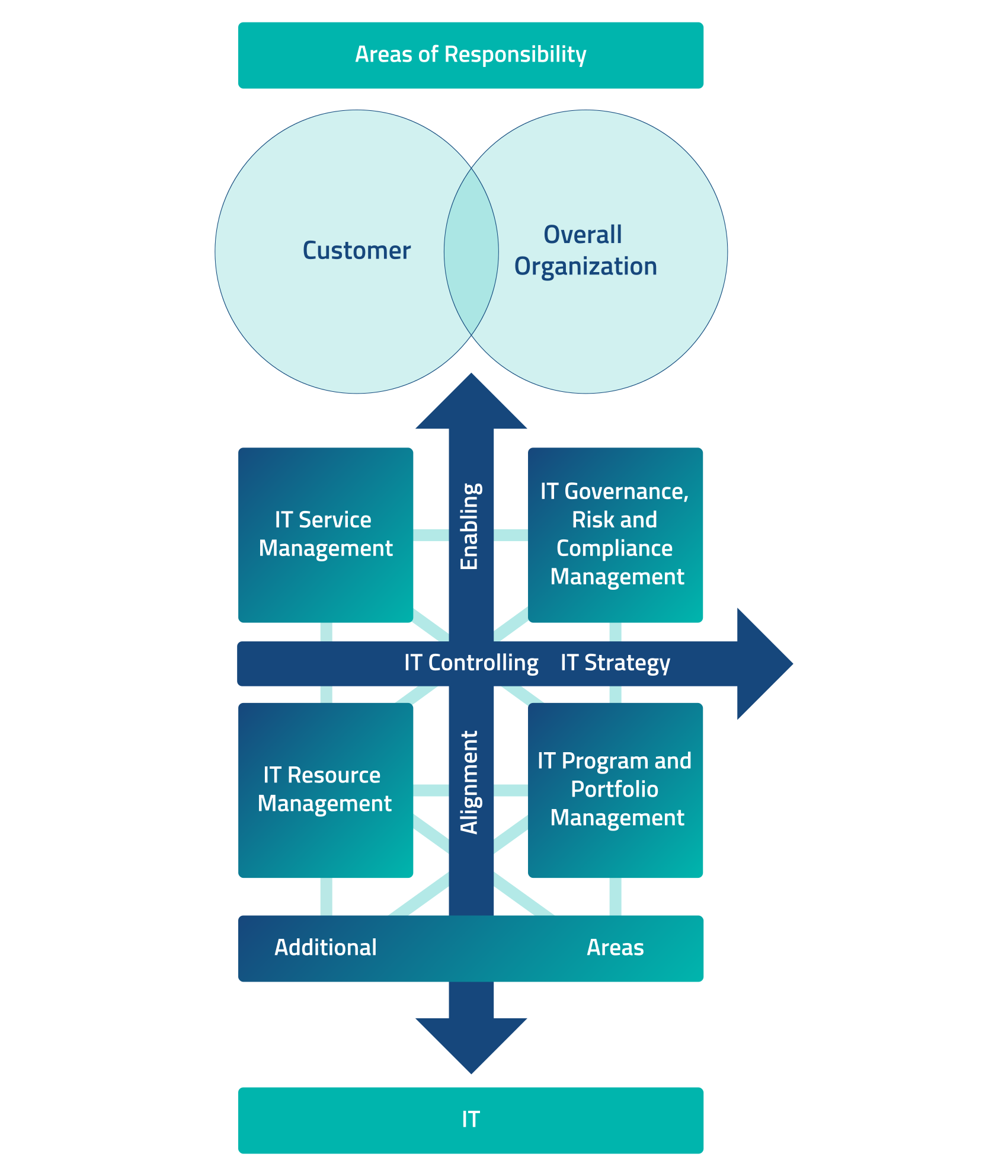
IT Resource Management encompasses the oversight of physical resources (e.g., servers, networks, and devices), digital resources (e.g., software, databases, and cloud services), human resources (e.g., IT staff, external service providers, and project teams), and financial resources (e.g., IT investment budgets, operational expenses, and outsourcing costs), all of which are essential for maintaining and advancing the IT infrastructure.
IT Infrastructure Management involves the planning, coordination, and maintenance of all physical and virtual components that enable a company’s IT operations. This includes hardware, software, networks, data, and cloud services, as well as the implementation of security measures (such as firewalls, antivirus programs, and regular updates) to minimize downtime and ensure the efficiency of the IT infrastructure.
IT Service Management focuses on how IT aligns with both internal and external customers. In this role, IT acts as a service provider, striving to deliver user-centered and efficient IT services, with a strong emphasis on areas such as incident management, change management, and service level management. It is built on structured processes and frameworks (e.g., ITIL, COBIT, ISO) that offer best practices for managing IT services.
IT Security Management is centered on safeguarding the IT infrastructure and the data it contains from security threats. Key components include defending against cyberattacks, managing access rights, conducting regular security updates, and implementing security policies. The goal is to protect the company from financial losses, reputational harm, and legal consequences.
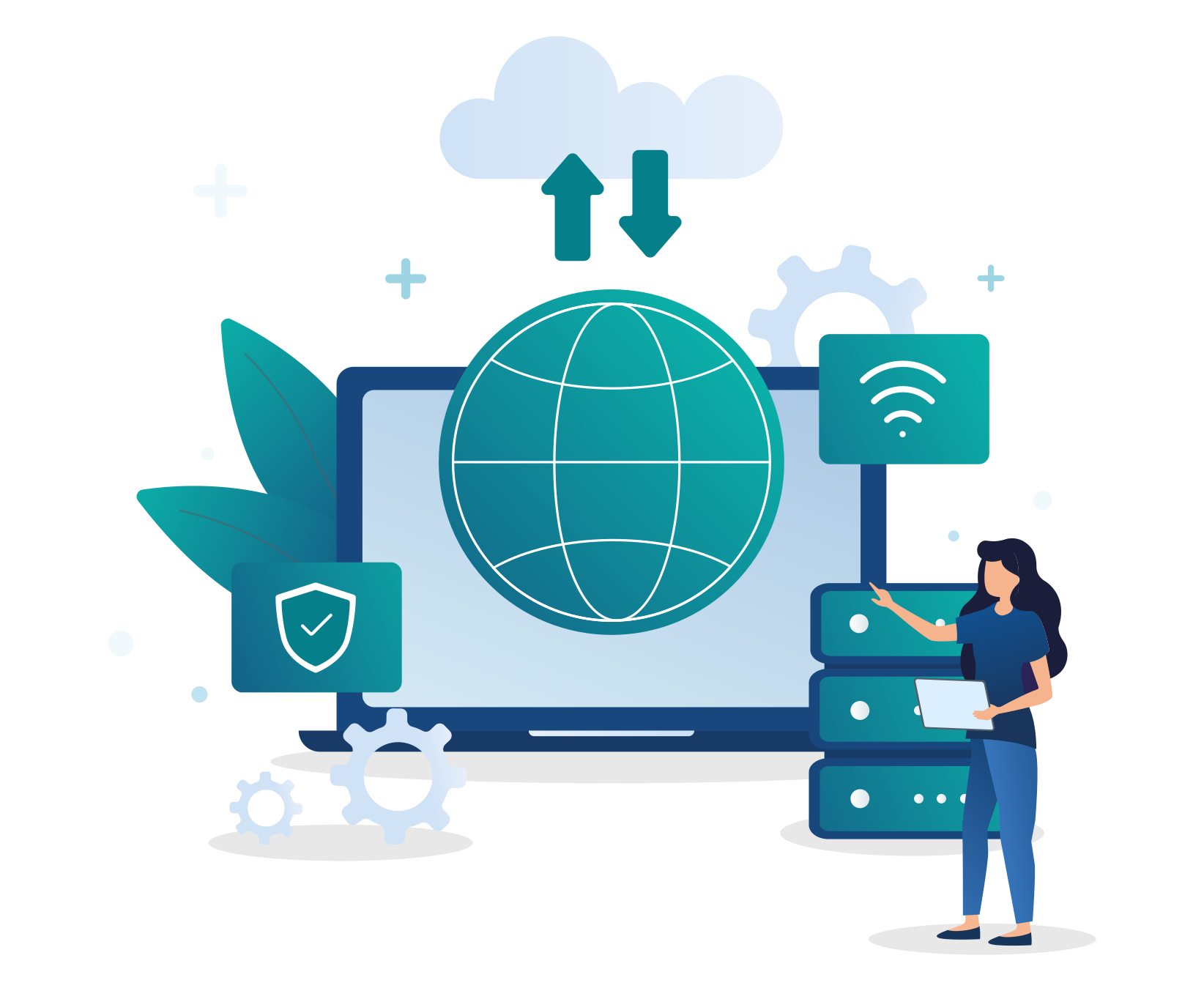
The use of cloud services is steadily growing as businesses seek greater flexibility and scalability. Cloud computing allows companies to access data and applications over the internet, reducing the need for on-premise infrastructure and offering cost savings with pay-as-you-go models. Hybrid cloud models, which combine private and public clouds, offer optimal resource utilization while providing enhanced control and security.
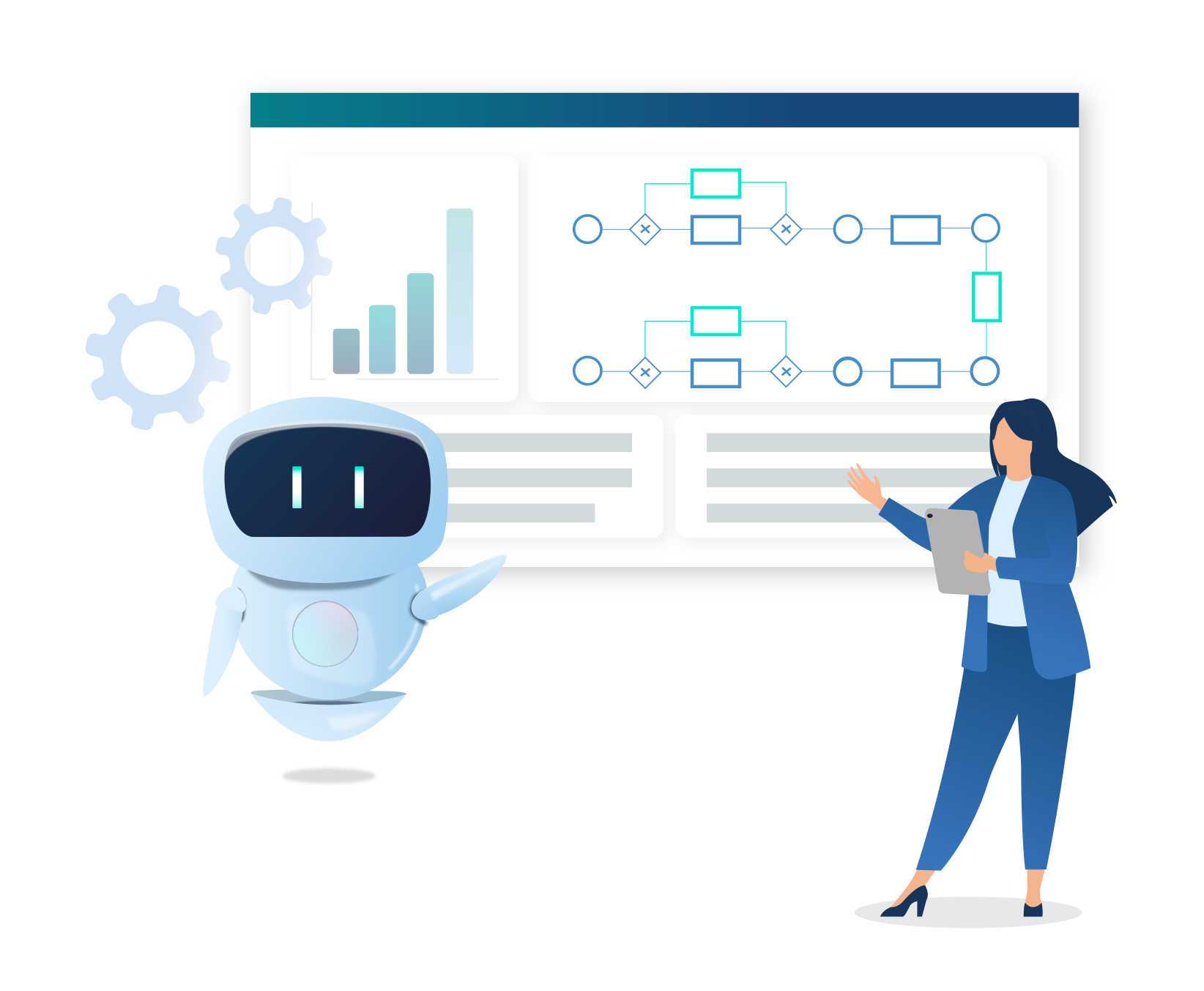
AI-driven solutions are becoming more prevalent in IT Management by automating routine tasks, improving decision-making, and optimizing system performance. Artificial Intelligence leverages machine learning algorithms and data-driven insights to analyze large volumes of data, identify patterns, and make predictions. As AI technology advances, it promises to bring even more transformative capabilities to IT management, enabling greater efficiency, agility, and innovation.
As environmental awareness continues to grow, companies are placing greater emphasis on sustainable IT practices. Green IT initiatives, such as reducing energy consumption in data centers and using eco-friendly hardware, are becoming increasingly important. Many businesses are also adopting cloud solutions to minimize their carbon footprint through optimizing resource use, while other companies are investing in recycling programs for electronic waste and prioritizing energy-efficient technologies. These efforts not only help to protect the environment but also contribute to cost savings and improvement of the company's overall reputation.

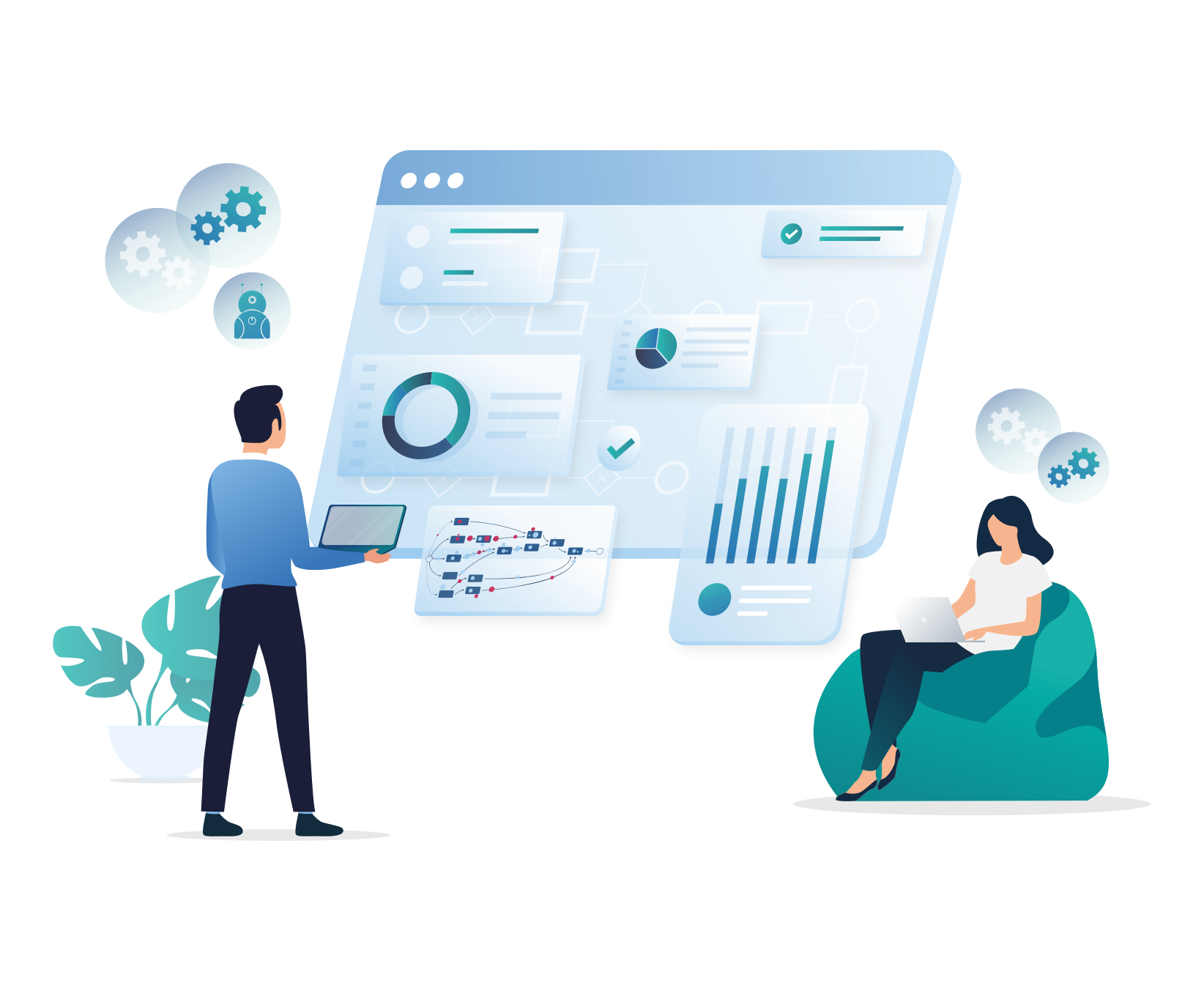
Business Process Management (BPM) has evolved from an isolated approach to a comprehensive discipline that is closely integrated with Enterprise Architecture Managemen (EAM) and digital transformation. A close collaboration between EAM and BPM allows companies to better align their business and IT strategies, thus creating valuable synergies. Both disciplines focus on optimizing business processes and enhancing the IT infrastructure that supports them. By integrating EAM and BPM, businesses can achieve a more streamlined workflow and improve overall agility. This alignment also helps in identifying areas for continuous improvement and driving innovation across departments.
Enterprise Architecture more and more evolves into a living map and rules engine, tightly paired with Business Process Management (BPM) as the operational execution layer. This integrated approach helps organizations govern AI responsibly, reduce costs, streamline portfolios, and prove measurable business outcomes. In our blog post, we share the top 7 Enterprise Architecture trends to watch in 2026, and what you can do to start implementing an EA strategy.

IT Management empowers organizations of all sizes to efficiently manage their intricate network of IT resources. Doing so, it drives innovation, helping organizations adopt new technologies, reduce costs, and stay ahead of competitors. To achieve success, the following best practices have emerged as highly effective and reliable:
Enterprise Architecture Management acts as a strategic bridge between business processes, IT infrastructure, and organizational goals. It provides a comprehensive view of a company’s IT landscape by seamlessly integrating all components of the IT architecture – ranging from applications and systems to data, technologies, and related business processes – in a structured and transparent way.
Start your journey to effective Enterprise Architecture Management with BIC EAM. Effortlessly align your business and IT strategies, streamline your IT Management, and build a future-ready IT landscape. BIC EAM acts as your navigation tool through the complex IT jungle – uncovering connections and dependencies, eliminating redundant systems, reducing risks, and driving scalable growth. With BIC EAM, you establish a solid foundation for long-term success in today’s fast-paced, technology-driven business environment.

Head of GBTEC Academy
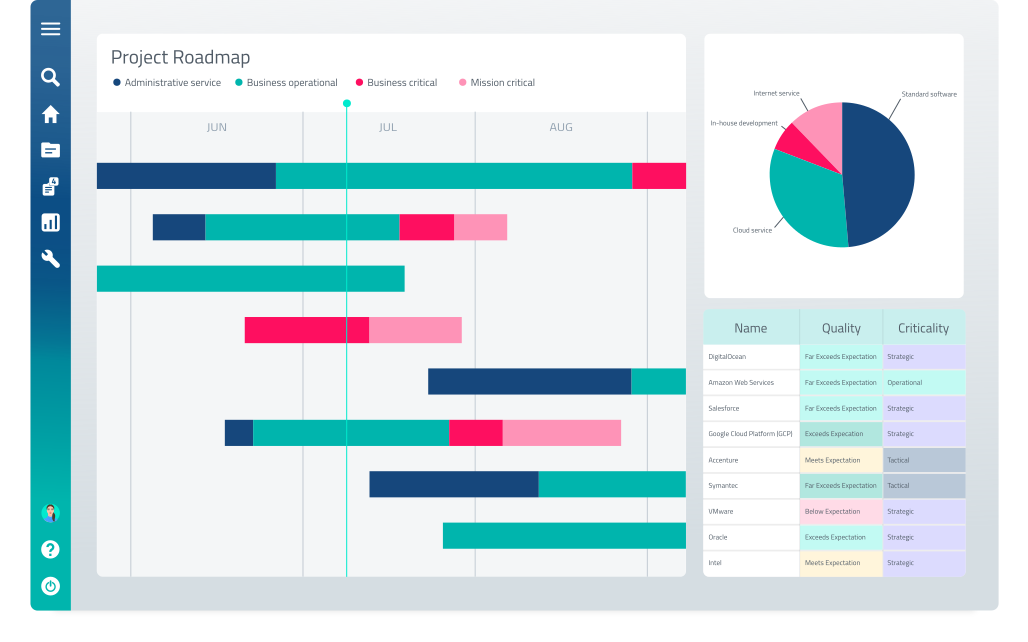
Christoph isn’t just the head of our GBTEC Academy – he also brings years of experience and deep expertise across our entire product portfolio. For many years, he worked closely with our customers as a consultant. Today, he and his team provide not only product-specific trainings but also help companies and professionals strengthen their skills in a wide range of topics, even beyond our own product offerings.
We have the information you need to unleash your full process potential. Take a look at our resources and start improving your business performance today.
GBTEC Software AG
Gesundheitscampus-Süd 23
44801 Bochum
Germany