




The 2026 EA Agenda: Integrated Transformation Management, Governed AI, and Measurable Outcomes
 15 December 2025
 When Enterprise Architecture (EA) is reduced to documentation, change becomes slow, risky, and expensive. Tool sprawl inflates costs, portfolios drift out of alignment, and unmanaged AI use creates compliance gaps and hefty fines. As a result, leaders lose visibility into whether initiatives actually move the needle on key KPIs.
According to a Gartner study, only 29% of operating models are designed for an AI-driven world – a clear signal that most organizations are still structured around outdated functional silos. AI, however, demands fluid value streams, adaptable capabilities, and connected systems. To succeed in AI, transformation, and modernization, organizations must link capabilities, processes, data, applications, and risks through one unified view.
That’s why, in 2026, Enterprise Architecture evolves into a living map and rules engine, tightly paired with Business Process Management (BPM) as the operational execution layer. This integrated approach helps organizations govern AI responsibly, reduce costs, streamline portfolios, and – most importantly – prove measurable business outcomes.
In this blog post, we share the top 7 Enterprise Architecture trends to watch in 2026, and what you can do to start implementing an EA strategy. The trends are:
- EA & BPM – The Integrated Backbone of Transformation
- Cost Reduction & Vendor Consolidation via Unified Platforms
- Regulatory-Driven EA
- AI-Ready Operating Model & Control Tower
- Process & Data Traceability
- Democratized EA through AI Assistants
- Sustainability Metrics & Technology Lifecycle Management

1. EA & BPM – The Integrated Backbone of Transformation
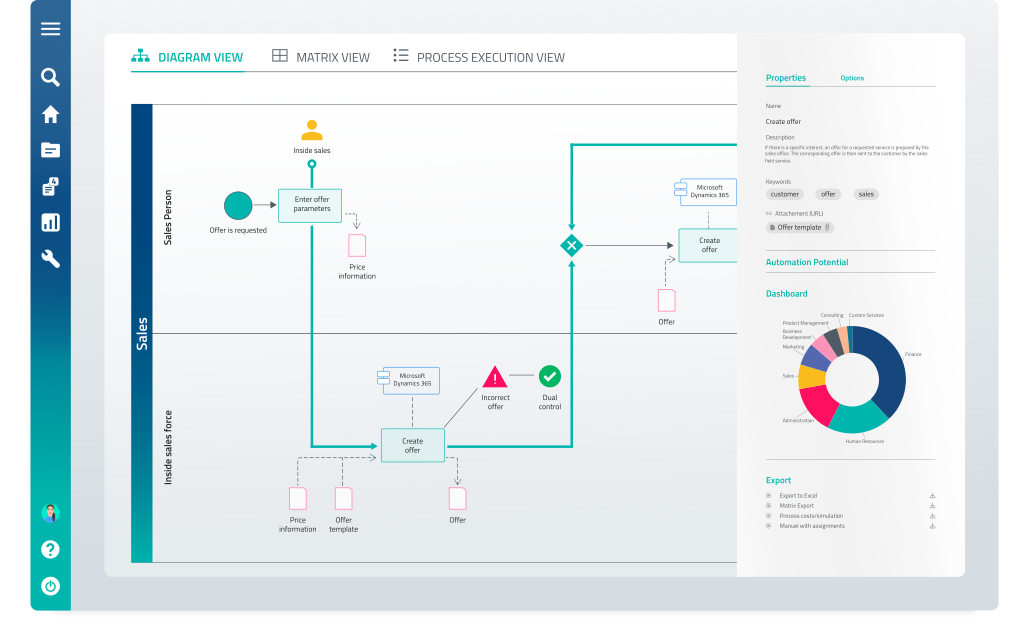
While EA defines what the organization is made of – its capabilities, applications, data, and technology – BPM shows how work actually gets done. When these perspectives merge, companies gain a clear, end-to-end view that turns strategy into controlled, measurable change. Instead of relying on slow, monolithic programs, they can drive continuous improvement from a unified architecture.
Modern EA platforms are therefore evolving into cross-disciplinary “metatools,” with BPM as the operational backbone for governed procedures, process intelligence, and AI-driven automation. With an integrated EA and BPM approach, organizations plan smarter, understand impacts earlier, execute more consistently, and track outcomes with confidence.
How to get started:
- Start with a shared business view: Identify top value streams, break them into major steps and list the key capabilities, processes, systems, data, and responsible teams for each step.
- Create a single source of truth: Store capabilities, processes, applications, and data objects in one repository and define ownership for each item.
- Align process models with the architecture: Link processes to capabilities and map process steps to applications, data, and controls.
- Use policies and standards to keep things consistent: Define modeling standards, set guardrails (e.g., each system needs an owner) and automate compliance checks.
2. Cost Reduction & Vendor Consolidation via Unified Platforms
Many organizations use separate tools for Enterprise Architecture, processes, workflow automation, and governance. Over time, this creates a complex and expensive tool landscape – with duplicate features, disconnected data, and unnecessary AI consumption. No wonder the EA market is now shifting toward unified platforms that bring these disciplines together in one place.
By consolidating tools, organizations can:
- Eliminate overlapping licenses and maintenance fees
- Reduce the number of systems they must integrate and audit
- Simplify planning and reporting
- Prevent unnecessary AI usage and infrastructure costs
- Generate six- to seven-figure cost optimization potential per year
- Cut planning cycles by up to 50%
- Reduce audit preparation effort by up to 60%
Unified platforms don’t just save money – they simplify cross-team collaboration and make it easier to govern processes, systems, and AI consistently.
How to get started:
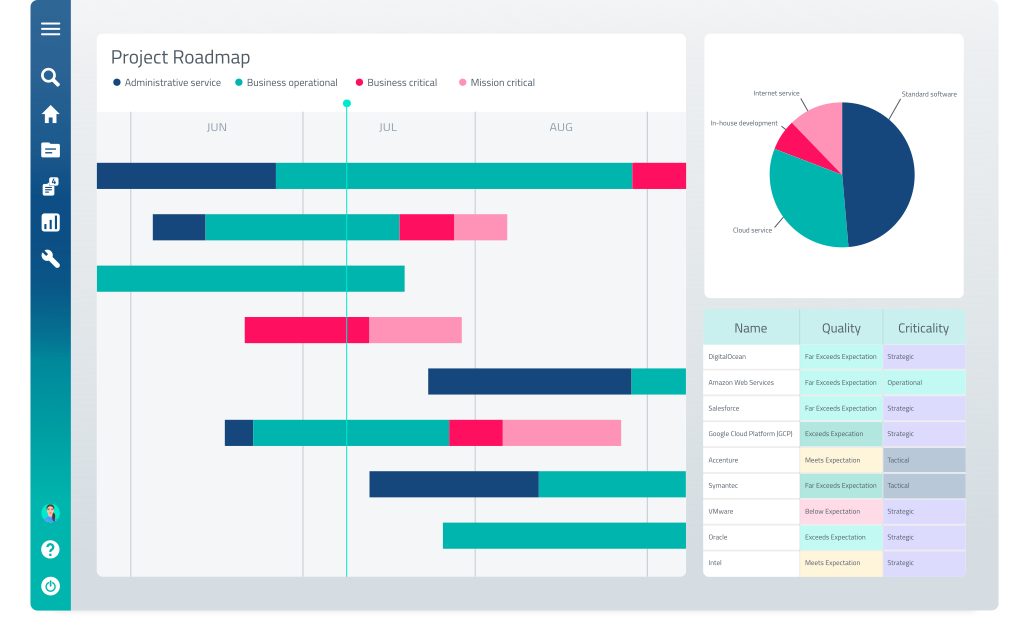
- Build a full inventory of tools, costs, overlaps, and criticality
- Choose a core platform that can replace multiple tools over time
- Create a phased consolidation plan with clear migration and decommission checkpoints
3. Regulatory-Driven EA
In 2026, compliance is a top driver of EA investment. Frameworks like DORA, NIS2, ESG reporting, the EU AI Act, and ISO 42001 require organizations to prove security, resilience, transparency, and governance. But most companies have scattered, incomplete information about systems, data, suppliers, and risks. This is where Enterprise Architecture (EA) becomes essential.
EA can act as the central compliance backbone by:
- Mapping key services, systems, data flows, and suppliers
- Linking them to required controls and policies
- Collecting the evidence needed for audits
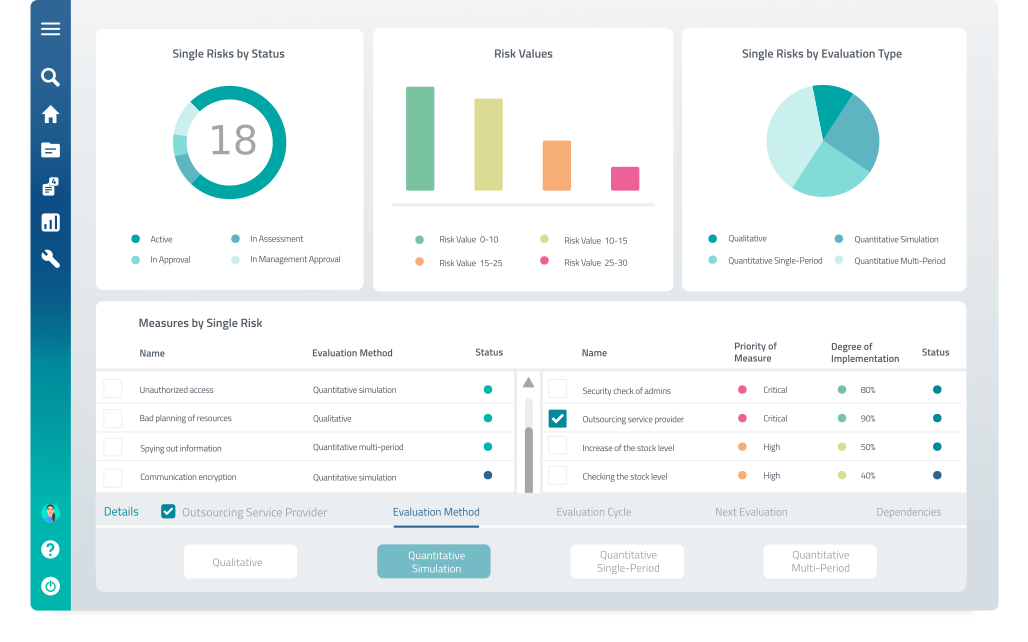
- Showing where risks exist through heatmaps
- Enabling quick responses using predefined playbooks
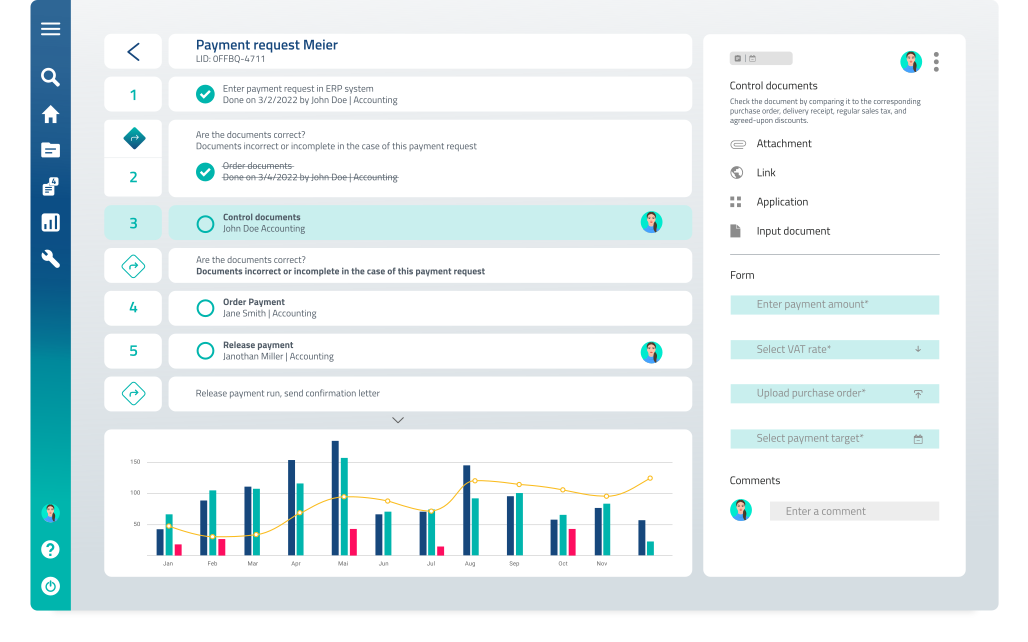
Business Process Management (BPM) then turns these policies into operational routines, ensuring that teams follow the right steps and that evidence (approvals, timestamps, logs) is automatically captured as part of the workflow. The result: compliance is no longer a painful annual exercise – it becomes built into daily operations.
How to get started:
- Identify critical services and systems as well as their dependencies and criticality
- Create a control-and-evidence model aligned to regulations
- Operationalize policies through repeatable workflows in your BPM tool
- Build two playbooks (containment + recovery) for your crown-jewel systems
4. AI-Ready Operating Model & Control Tower
Many companies experiment with AI, but most struggle to move beyond prototypes. According to Gartner, most organizations hover around 50% AI readiness and 25% human readiness – meaning teams, processes, and systems are not prepared to use AI safely, efficiently, or at scale.
In 2026, Enterprise Architecture (EA) becomes the AI control tower – the central hub for visibility, governance, and business alignment.
This includes:
- A transparent AI use-case register
- Automated discovery of shadow AI
- Enforcing rules through policy-as-code instead of manual checks
- Linking AI projects to business KPIs and value streams
- Real-time monitoring of accuracy, performance, and cost
- Placing automated guardrails around AI agents
- Ensuring data sovereignty and vendor compliance
The goal: AI that is safe, measurable, cost-controlled, and aligned with business value – not just experimental.
How to get started:
- Create a simple AI register – owner, data, KPIs, risks, approvals, retention
- Define light AI governance rules on data use, storage, and cost thresholds
- Scale one high-value use case with clear KPIs and accuracy targets
5. Process & Data Traceability (Process/Data Mesh)
Leaders want to understand how work actually runs in their organization – not just in theory, but in day-to-day operations. They need a direct line from processes to data, systems, and outcomes.
Today, most companies don’t have that transparency. Process documentation is often disconnected from the actual data and systems. As a result, reports are hard to trust, and AI or automation efforts fail because they sit on top of inconsistent or poorly governed processes.
In 2026, organizations will focus on building a traceability mesh – a clear map that shows how processes, data, systems, and controls connect. This unlocks reliable analytics, trusted AI, and fast root-cause analysis, while supporting compliance through transparent, auditable flows.
How to get started:
- Pick one value stream and map processes, systems, data, controls, and bottlenecks
- Add operational KPIs like cycle time, rework rate, error frequency
- Build a shared glossary of processes, data objects, systems, and KPIs
- Use traceability to identify automation opportunities and root-cause issues
6. Democratized EA through AI Assistants
When only experts understand the enterprise architecture, transformation stalls. To scale change, everyone in the business needs to be able to contribute – not just enterprise architects or IT analysts.
Modern EA tools are therefore becoming far more user-friendly and AI-infused.
AI improves quality and speed by:
- Prompting for missing information
- Enforcing modeling standards
- Suggesting corrections
- Reducing manual reviews
How to get started:
- Use guided templates with essential fields for capabilities, processes, systems, data
- Activate AI assistance to detect gaps, enforce rules, and prompt updates
- Engage business teams to enrich and maintain models
7. Sustainability Metrics & Technology Lifecycle Management
Sustainability is no longer just an environmental goal – it affects how companies choose, run, and retire technology. Every application, system, and vendor has a carbon impact, and organizations must balance cost, risk, and emissions when making technology decisions.
EA provides the structure to track technology lifecycles, standards, risks, and – when combined with sustainability metrics – carbon usage. This helps companies:
- Retire high-emission or outdated systems
- Choose low-carbon hosting regions
- Reduce data-transfer emissions
- Plan modernization with a balance of cost, risk, and sustainability
How to get started:
- Add lifecycle and sustainability fields to your technology catalog (end-of-life date, estimated emissions, egress energy)
- Define a few simple tech policies (low-carbon hosting, timely end-of-life retirement)
- Review the top 20 systems by cost, risk, carbon footprint and business impact
- Use heatmaps to prioritize modernization and retirement
The 2026 EA mandate
Gartner’s operating-model guidance is clear. 2026’s winners will organize around differentiating capabilities, use value streams to structure execution, and drive continuous transformation through a unified EA and BPM backbone with clear guardrails and measurable outcomes.
Ready to turn strategy into measurable action?
Named a Leader in the SPARK Matrix™ for Application Portfolio Management in Q4 2025, BIC EAM provides the single, living map for capabilities, processes, applications, data, and controls – directly integrated with BPM for improved execution.
Customers have reported six- to seven-figure annual savings, planning cycles cut up to 50%, and 40–60% less audit prep. If you’re ready to turn strategy into governed, measurable action, it’s time to explore BIC EAM.
GBTEC Software AG
Gesundheitscampus-Süd 23
44801 Bochum
Germany
